



What's Happening?
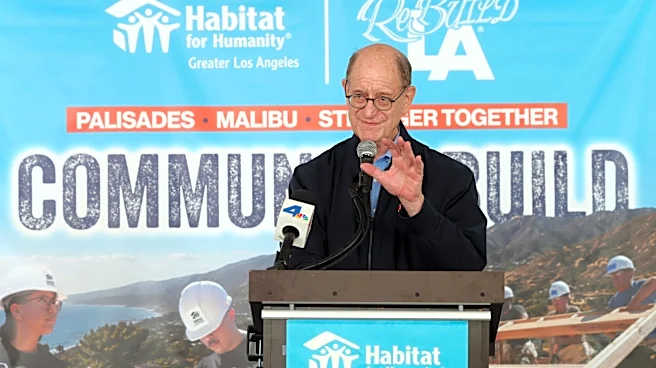
Grand Canyon University (GCU) and Habitat for Humanity Central Arizona have expanded their 'Lopes Go Local' initiative, a semiannual event focused on rehabilitating homes in west Phoenix neighborhoods. On a recent Saturday, 200 volunteers, with approximately
90% being GCU students, painted and landscaped nine homes. This expansion now includes areas from Interstate 17 to 29th Avenue, and Osborn Road to Butler Drive, aligning with the 27Collab community coalition. The partnership, which began in 2014, is part of GCU's Five-Point Plan for community engagement and has resulted in the renovation of 630 homes and 1,563 repairs over the past decade. Homeowners like Jack and Judy Mason, who have lived in their house for 42 years, have benefited from these efforts, receiving upgrades such as roofing, windows, and insulation, in addition to painting.
Why It's Important?
This expanded initiative is crucial for the revitalization of west Phoenix neighborhoods, directly impacting the quality of life for residents and contributing to the economic stability of the area. The collaboration between GCU and Habitat for Humanity represents one of the largest neighborhood revitalization efforts of its kind in the nation. The significant volunteer hours donated by GCU students and funds from the university's Allocate to Elevate program have contributed to an 869% increase in median home values in the 85017 ZIP code since 2011. This not only improves individual homes but also fosters a stronger sense of community and pride among residents. For GCU students, participation offers valuable service-learning experiences, connecting their academic pursuits with real-world community needs.
What's Next?
The continued expansion of the 'Lopes Go Local' initiative suggests a sustained commitment from Grand Canyon University and Habitat for Humanity to community development in west Phoenix. The alignment with the 27Collab coalition indicates a broader, more coordinated effort to transform the 27th Avenue corridor into a thriving community. Future efforts will likely focus on maintaining the momentum of home renovations and repairs, potentially incorporating more community partners and increasing the number of homes served. The long-term goal is to continue restoring the neighborhood to its middle-class roots, which will require ongoing volunteer engagement, financial support, and strategic planning to address the evolving needs of the community. The success of this program could also serve as a model for other university-community partnerships across the nation.
Beyond the Headlines
Beyond the immediate impact of home renovations, this partnership highlights the profound social and ethical responsibilities that educational institutions can undertake within their local communities. By engaging students in direct service, GCU is fostering a generation of socially conscious citizens who understand the importance of civic engagement and community support. The initiative also addresses systemic issues of housing inequality and neighborhood decline, demonstrating how collaborative efforts can lead to tangible improvements in property values and living conditions. The personal stories of homeowners like the Masons underscore the human element of these projects, illustrating how a fresh coat of paint or a new roof can restore dignity and hope. This model of community engagement can inspire other universities to leverage their resources and student bodies to create lasting positive change in their surrounding areas, promoting a culture of service and mutual support.