


What's Happening?
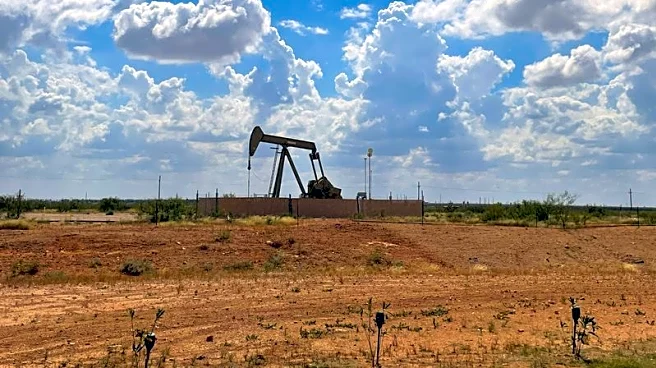
Argentina is experiencing a notable increase in crude oil production, primarily driven by the Vaca Muerta shale play. According to the U.S. Energy Information Administration's December Short-Term Energy Outlook, Argentina's crude output is projected to rise
from approximately 740,000 barrels per day (bpd) in 2025 to about 810,000 bpd in 2026. The Vaca Muerta shale play, one of the few unconventional oil basins outside the United States producing at scale, is expected to account for more than 60% of the country's national production. This growth is part of a broader trend in non-OPEC crude production, with Brazil, Guyana, and Argentina collectively contributing significantly to global supply increases.
Why It's Important?
The increase in Argentina's crude production is significant for several reasons. Firstly, it highlights the potential of the Vaca Muerta shale play as a major contributor to global oil supply, particularly as non-OPEC countries continue to expand their production capabilities. This growth could enhance Argentina's position in the global energy market, potentially leading to increased economic benefits and energy security for the country. Additionally, the rise in production from non-OPEC countries like Argentina may influence global oil prices and supply dynamics, offering a counterbalance to OPEC's production strategies. This could have broader implications for international energy markets and geopolitical relations.
What's Next?
As Argentina's crude production continues to grow, the country may seek to further develop its energy infrastructure and export capabilities to capitalize on the increased output. This could involve investments in transportation and refining facilities to support the expanded production from the Vaca Muerta shale play. Additionally, Argentina may explore new partnerships and trade agreements to enhance its presence in the global energy market. The continued growth in non-OPEC production, including Argentina's contributions, will likely be monitored closely by industry stakeholders and policymakers to assess its impact on global supply balances and market stability.