






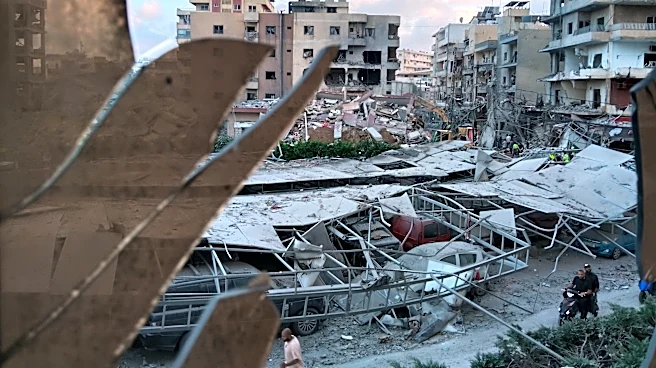
What's Happening?
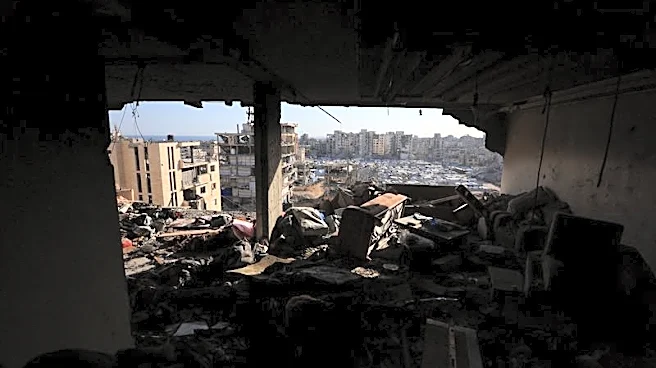
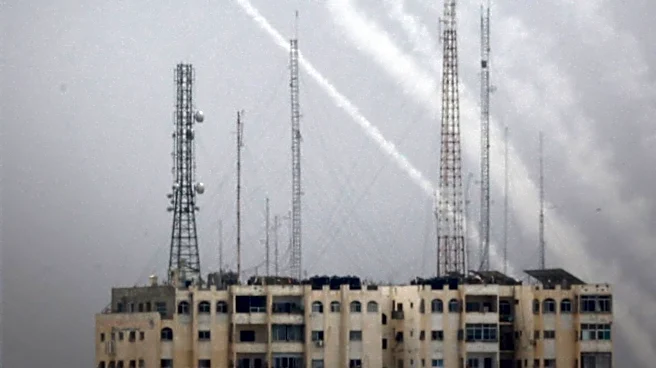
Israel and Lebanon have agreed to renew a ceasefire, brokered by the U.S., aimed at ending hostilities and creating Lebanese security zones. The agreement requires a complete cessation of fire from Hezbollah and the evacuation of its operatives from southern
Lebanon. Despite the ceasefire, Hezbollah has rejected the plan, calling it a 'roadmap to annihilate part of the Lebanese people.' The Lebanese government, negotiating without Hezbollah, aims to reassert control over the country. The ceasefire is part of broader U.S. efforts to separate the conflict from the Iran war and establish peace in the region.
Why It's Important?
The ceasefire agreement is significant as it represents a step towards stabilizing the region and potentially reducing tensions between Israel and Lebanon. However, Hezbollah's rejection poses a challenge to the ceasefire's implementation and highlights the complexities of negotiating peace in the region. The U.S. aims to use this agreement to further its diplomatic efforts with Iran, but Hezbollah's stance could complicate these negotiations. The outcome of this ceasefire could impact regional security and influence U.S. foreign policy in the Middle East.
What's Next?
The next steps involve continued negotiations to implement the ceasefire in phases, with the Lebanese armed forces taking control of designated zones. The U.S. will likely continue its diplomatic efforts to separate the Lebanon conflict from the Iran war. The international community will be watching closely to see if Hezbollah's rejection leads to further hostilities or if diplomatic solutions can be found. The situation remains fluid, with potential implications for regional stability and U.S. diplomatic strategies.