

What's Happening?
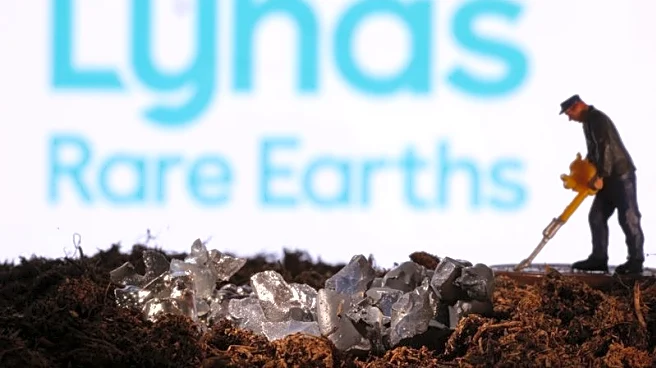
Australia's Lynas Rare Earths has finalized a revised supply agreement with Japan Australia Rare Earths (JARE), ensuring a steady annual supply of 5,000 tonnes of neodymium-praseodymium, a crucial component for rare-earth magnets. This agreement is part
of a broader strategy to secure critical mineral supplies outside of China, which dominates the global market. Under the terms of the deal, Lynas will allocate 75% of its heavy rare earth oxide production to Japanese industries, with JARE committing to purchase half of Lynas' total heavy rare earth output. The agreement includes a floor price of $110 per kilogram for the committed volume, with provisions for profit-sharing if prices exceed $150 per kilogram. This deal is significant as it aligns with global efforts, particularly by the U.S., to diversify supply chains for critical minerals and reduce dependency on China.
Why It's Important?
The agreement between Lynas and JARE is crucial in the context of global supply chain security for rare earth elements, which are vital for numerous high-tech applications, including electronics, renewable energy technologies, and defense systems. By securing a reliable supply from Lynas, Japan can mitigate risks associated with over-reliance on Chinese exports, which currently account for about 90% of the world's rare earth magnet production. This move is also aligned with U.S. interests in securing critical minerals, as it supports efforts to establish alternative supply chains and reduce geopolitical vulnerabilities. The deal not only strengthens Japan's industrial base but also contributes to global efforts to ensure stable and diversified access to essential materials.
What's Next?
The long-term implications of this agreement could see further collaborations between Lynas and other international partners seeking to secure rare earth supplies. As global demand for these materials continues to rise, particularly with the growth of electric vehicles and renewable energy technologies, other countries may follow Japan's lead in securing similar agreements. Additionally, this deal may encourage further investment in rare earth mining and processing capabilities outside of China, potentially leading to a more balanced global market. Stakeholders in the U.S. and other Western countries are likely to monitor this development closely as they strategize on securing their own critical mineral supplies.