



What's Happening?
Rob Arlett, a former campaign chair for President Trump, has stated that President Trump is primarily focused on protecting himself and the Republican Party. In an interview with Al Jazeera’s 'This is America,' Arlett asserted that President Trump “cares
about Trump the most.” According to Arlett, President Trump’s personal brand and his ability to motivate voters are central to the Republican Party’s strategy for upcoming midterm elections. This perspective suggests that President Trump's actions and decisions are largely driven by considerations for his own political standing and the broader success of the GOP, rather than solely by policy or public service. Arlett's comments provide an insider's view on the motivations and strategic thinking within President Trump's political orbit, emphasizing a self-preservation and party-centric approach to politics.
Why It's Important?
The statement from a former campaign chair offers a significant insight into the perceived motivations of President Trump, which can influence public understanding of his political actions and the Republican Party's direction. If President Trump's primary focus is indeed on himself and the party, it could shape how policies are formulated, how political alliances are made, and how public discourse is framed. This perspective is particularly relevant for the upcoming midterm elections, as it suggests that President Trump's personal brand and voter mobilization capabilities are considered critical assets for the GOP. For voters, understanding these underlying motivations can inform their interpretation of political rhetoric and their decisions at the ballot box. For political analysts and strategists, Arlett's comments provide a framework for predicting future political maneuvers and understanding the internal dynamics of the Republican Party, especially concerning President Trump's continued influence.
What's Next?
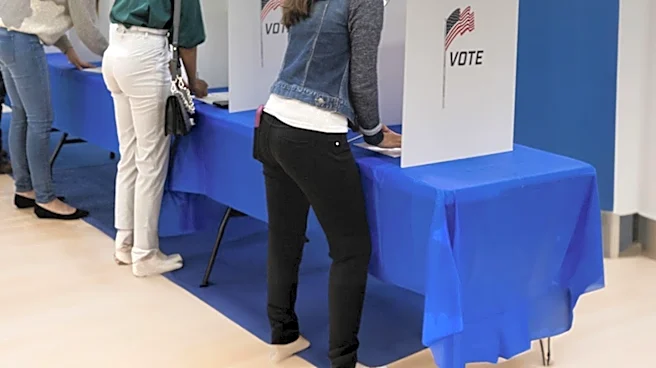
Arlett's comments are likely to fuel ongoing discussions about President Trump's role within the Republican Party and his potential future political endeavors. The emphasis on President Trump's personal brand and ability to motivate voters suggests that he will continue to be a prominent figure in Republican politics, potentially playing a key role in endorsing candidates and shaping the party's platform for the midterm elections. This could lead to increased focus on his rallies, public statements, and social media presence as indicators of the party's strategic direction. Other political figures and commentators may react to Arlett's assessment, either corroborating or refuting his claims, further contributing to the public debate. The Republican Party's performance in the midterms will be a crucial test of the effectiveness of a strategy centered around President Trump's influence and personal appeal.
Beyond the Headlines
Arlett's remarks delve into the broader phenomenon of personality-driven politics, where the individual leader's brand and charisma can become as, if not more, important than traditional party platforms or policy positions. This trend has significant implications for democratic processes, as it can shift voter focus from substantive issues to personal loyalty and emotional appeals. The idea that a leader's primary motivation is self-preservation, as suggested by Arlett, raises questions about accountability and the public good. It also highlights the evolving nature of political leadership in the modern era, where media presence and direct communication with a base can bypass traditional party structures. This dynamic can lead to both strong voter engagement and potential polarization, as political discourse becomes more centered on individual figures rather than collective ideals or policy debates. The long-term impact could be a redefinition of political party structures and the role of individual leaders within them.