






What's Happening?
The governors of the six New England states are collectively requesting an additional $3 billion in federal home energy assistance from Congress. This request comes as heating oil prices in the region are projected to increase by up to 50%, placing significant
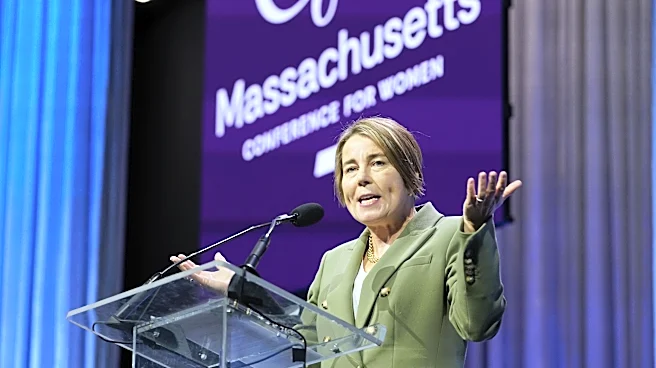
financial strain on families. Congress has already allocated $4 billion to the Low-Income Home Energy Assistance Program (LIHEAP), and approval of this new request would raise the total to $7 billion. The governors, including Maura Healey of Massachusetts, Ned Lamont of Connecticut, Janet Mills of Maine, Kelly Ayotte of New Hampshire, Dan McKee of Rhode Island, and Phil Scott of Vermont, cited a forecast from the National Energy Assistance Directors Association predicting higher heating oil prices as a primary reason for the urgent need for more assistance. They emphasized that New England's cold winters, older housing stock, and heavy reliance on delivered heating fuel make its residents particularly vulnerable to these price increases.
Why It's Important?
The potential 50% surge in heating oil prices in New England poses a critical economic and social challenge for the region. This increase directly impacts household budgets, particularly for low-income families, seniors on fixed incomes, and individuals with disabilities, who may face difficult choices between heating their homes and affording other basic necessities. The governors' appeal highlights the regional vulnerability to energy market fluctuations and the need for federal intervention to mitigate the financial burden on residents. The additional $3 billion in LIHEAP funding would provide crucial relief, helping to prevent widespread energy poverty and ensuring that vulnerable populations can maintain safe living conditions during the winter months. This situation also underscores the broader implications of energy policy and infrastructure on regional economies and the daily lives of citizens.
What's Next?
The governors' letter, which describes the additional assistance as "urgently needed," has been sent to House and Senate appropriations committee leaders, including Maine Senator Susan Collins and Connecticut Representative Rosa DeLauro. The next step involves congressional review and potential approval of the requested $3 billion in supplemental funding for LIHEAP. If approved, the funds would be distributed to states to help residents cover their heating costs. Meanwhile, households across the Northeast are bracing for higher heating oil bills, with some projections indicating costs as high as $2,300 for the winter. State leaders and community organizations will continue to monitor energy prices and respond to the evolving needs of their constituents, potentially exploring other state-level initiatives to support residents if federal aid is delayed or insufficient.
Beyond the Headlines
This situation in New England reveals deeper issues concerning energy independence, infrastructure, and climate policy. Governor Healey, for instance, previously blocked two gas pipelines while serving as attorney general, a stance she highlighted during her gubernatorial campaign. While the current funding request focuses on heating oil, past decisions regarding natural gas infrastructure could influence the region's long-term energy resilience and cost stability. The reliance on delivered heating fuel, as noted by the governors, points to a broader challenge in diversifying energy sources and improving energy efficiency in older housing stock. This event could catalyze further discussions on sustainable energy solutions, regional energy security, and the balance between environmental goals and immediate economic pressures on consumers.