


What's Happening?
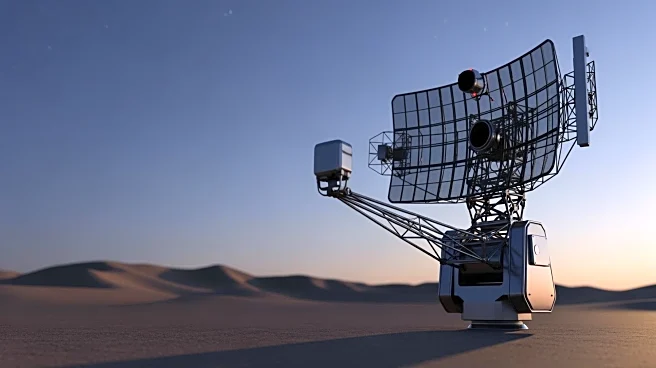
The U.S. State Department has approved a potential sale of Ku Band Multi-Function Radio Frequency System Radars to Jordan, valued at $280 million. This sale is part of a broader U.S. strategy to bolster military capabilities in the region. The principal
contractor for this sale is RTX Missile Defense Technologies. Concurrently, the U.S. military has increased its presence at a Jordanian airbase, with satellite imagery showing over 60 fighter jets stationed at the Muwaffaq Salti Air Base. This is a significant increase from the usual number of U.S. attack aircraft at the base. Additionally, the U.S. has relocated its forces from the al-Tanf military base in Syria to Jordan, marking a strategic shift in military deployment in the Middle East.
Why It's Important?
This development signifies a strategic realignment of U.S. military resources in the Middle East, reflecting ongoing geopolitical dynamics in the region. The sale of advanced radar systems to Jordan enhances the country's defense capabilities, potentially strengthening its role as a key U.S. ally in the region. The increased military presence in Jordan underscores the U.S.'s commitment to maintaining stability and countering potential threats in the Middle East. This move may also influence regional power balances, particularly in light of tensions with Iran and ongoing conflicts in neighboring countries.
What's Next?
The U.S. and Jordan are likely to continue strengthening their military cooperation, with potential for further arms sales and joint military exercises. The relocation of U.S. forces from Syria to Jordan may lead to changes in U.S. military strategy in the region, with implications for ongoing conflicts and diplomatic relations. Regional actors, including Iran, may respond to these developments with increased military posturing or diplomatic initiatives. The international community will be watching closely to see how these changes affect regional stability and U.S. foreign policy in the Middle East.