








What's Happening?
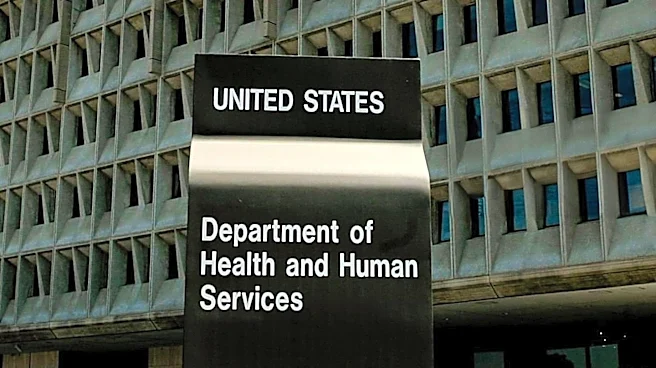
The Department of Health and Human Services (HHS) has launched the Procurement Alignment and Collaboration Task Force (PACT) to streamline its acquisition processes. This initiative, led by Jennifer Johnson, HHS's deputy assistant secretary for acquisitions
and senior procurement executive, aims to centralize and consolidate common IT and professional services purchases through a shared-services model. In less than a year, PACT has moved nearly 5,000 contracts into a new shared-services organization. The primary goals of PACT are to reduce the number of tools and systems used by the acquisition workforce and to protect mission-specialized procurements by keeping them close to the programs they support. Johnson emphasized a deliberate approach, focusing on consolidating 'lower-hanging fruit' such as laptops, mobile phones, IT licenses, and administrative support, while ensuring critical work like National Institutes of Health research contracts and Indian Health Service medical supplies remain with specialized teams. HHS established the Office of Mission Acquisition Solutions (OMAS) after receiving approval for its working capital fund budget in January, which now manages approximately 5,000 contracts with a staff of about 230 people. This internal consolidation strategy was adopted in response to a presidential executive order on common procurement, allowing HHS to retain control over its acquisition functions rather than transferring them to the General Services Administration (GSA).
Why It's Important?
The PACT initiative is a significant undertaking for HHS, one of the federal government's largest and most fragmented acquisition portfolios. By centralizing common procurements, HHS aims to achieve greater efficiency, reduce redundancies, and leverage its substantial buying power to negotiate better deals. This strategic approach is expected to generate cost savings that can be reinvested into critical mission needs, ultimately improving the delivery of healthcare services and research outcomes. The consolidation also addresses the challenge of a sprawling array of tools and systems, which can hinder productivity and create inefficiencies within the acquisition workforce. By keeping mission-critical procurements within the department, PACT ensures that specialized expertise remains aligned with specific program requirements, preventing potential disruptions to vital services like medical supplies for the Indian Health Service or research contracts for the National Institutes of Health. Furthermore, the initiative's focus on internal hiring to staff the new shared-services organization has allowed HHS to re-engage acquisition professionals who were previously affected by workforce reductions, bolstering internal capacity and expertise. This modernization effort could serve as a model for other federal agencies grappling with similar procurement challenges, demonstrating how strategic consolidation can enhance operational effectiveness and resource allocation.
What's Next?
In the upcoming fiscal year, HHS plans to move beyond the initial intake phase of PACT and begin identifying duplicative contracts. The next critical step involves applying strategic sourcing methodologies to consolidate these contracts, with the goal of leveraging the department's collective buying power to secure more favorable terms and pricing. The anticipated savings from these efforts are intended to be reinvested into mission-critical areas. Operationally, HHS is working to consolidate its procurement systems, as the department currently operates across four different systems, which Johnson acknowledges is inefficient. The aim is to streamline these systems to enhance efficiency and increase workforce mobility, allowing staff to rotate more easily among divisions such as the Centers for Disease Control and Prevention (CDC), National Institutes of Health (NIH), and the Administration for Strategic Preparedness and Response. To foster greater transparency and engagement with the industry, HHS is conducting an OMAS industry day, a 'Market Hours' matchmaking program, and a mission problem survey. Looking ahead to fiscal year 2027, HHS intends to launch a public-facing OMAS website to provide vendors with clear insights into shifting priorities and procurement opportunities, further solidifying its goal of becoming a premier acquisition organization within the federal government.
Beyond the Headlines
The PACT initiative at HHS represents a broader trend within the federal government towards modernizing and optimizing administrative functions through technology and strategic restructuring. Beyond the immediate benefits of cost savings and efficiency, this effort could lead to a more agile and responsive procurement ecosystem within HHS, capable of adapting to evolving healthcare needs and technological advancements. The emphasis on retaining mission-critical functions internally, rather than outsourcing them, reflects a strategic decision to maintain institutional knowledge and control over sensitive areas. This approach could also foster a stronger internal culture of expertise and collaboration among acquisition professionals. However, the success of such large-scale consolidation hinges on effective change management and continuous communication to ensure buy-in from various departmental units. The long-term implications include the potential for enhanced data analytics in procurement, leading to more informed decision-making and better contract management. This initiative also highlights the ongoing challenge for federal agencies to balance efficiency gains with the need to support diverse and specialized program requirements, ultimately aiming to improve public services through better resource stewardship.