
What's Happening?
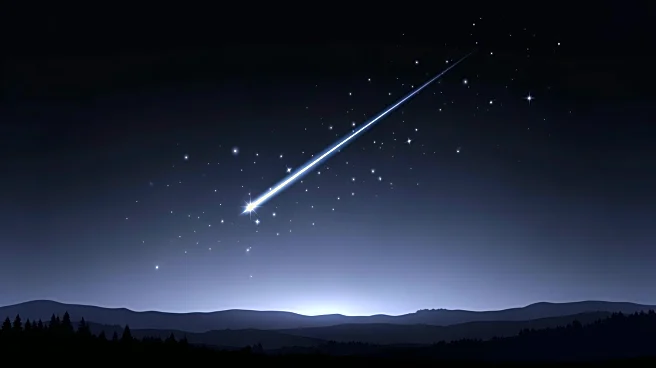
The Geminid meteor shower, renowned for its vivid colors and high intensity, is currently underway and will reach its peak this weekend. According to the International Meteor Organization, the Geminids
are considered the best and most reliable of the major annual meteor showers. Originating from the asteroid 3200 Phaethon, the shower is unique as it does not develop a cometary tail, and the meteors are denser than typical cometary dust. The shower began on December 4 and will continue until December 17, with the peak occurring on the night of December 13 into the morning of December 14. Observers in areas with minimal light pollution may witness between 120 to 150 meteors per hour, while those in brighter areas might see around 60 per hour.
Why It's Important?
The Geminid meteor shower provides a significant opportunity for astronomical enthusiasts and the general public to engage with celestial events. As one of the most reliable meteor showers, it offers a chance for educational outreach and public interest in astronomy. The event is particularly accessible to young viewers, as it starts around 9 or 10 p.m. nightly, making it a family-friendly activity. The visibility of the shower across various regions can foster community gatherings and stargazing events, promoting interest in science and nature. Additionally, the Geminids serve as a reminder of the dynamic nature of our solar system and the ongoing interactions between celestial bodies.
What's Next?
As the peak of the Geminid meteor shower approaches, astronomers and enthusiasts are preparing for optimal viewing conditions. Many communities and organizations may host stargazing events to capitalize on the shower's visibility. The event could also lead to increased media coverage and educational programs aimed at explaining the science behind meteor showers and their origins. Following the peak, the shower will continue to be visible until December 17, providing additional opportunities for observation and engagement.
Beyond the Headlines
The Geminid meteor shower highlights the importance of preserving dark skies and reducing light pollution to enhance astronomical observations. Efforts to minimize artificial lighting can improve the visibility of such celestial events, benefiting both amateur and professional astronomers. The shower also underscores the need for continued research into asteroids and their interactions with Earth, contributing to our understanding of potential threats and the history of our solar system.