
What's Happening?
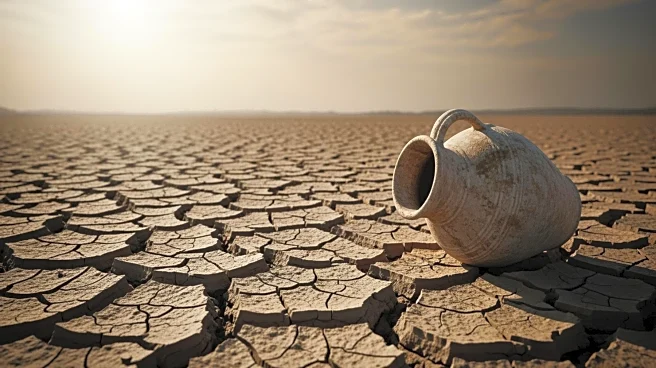
Iran is experiencing a severe water crisis exacerbated by a historic drought and climate change. The country has seen its driest autumn in over 50 years, with precipitation at only 5% of normal levels. This has led to significant water shortages, particularly
affecting Tehran, where government officials have warned that the capital may need to be relocated if conditions do not improve. The crisis is compounded by inefficient water use in agriculture, which consumes 90% of the country's water supplies. Policies from the 1979 Islamic Revolution, which made water freely available, and the push for self-sufficiency during the Iran-Iraq war have contributed to the current situation. The drought has also become a political issue, with water shortages sparking protests and international offers of assistance being made.
Why It's Important?
The water crisis in Iran has significant implications for the country's political stability and economic future. The shortage threatens not only the agricultural sector but also regional stability and global food markets. As Iran struggles under international sanctions, the economic burden of relocating the capital or implementing large-scale water management reforms could be substantial. The crisis highlights the broader impact of climate change in the region, with increased drought frequency expected due to global warming. This situation underscores the need for sustainable water management practices and international cooperation to address climate-related challenges.
What's Next?
Iran faces critical decisions in addressing its water crisis. The government may need to implement emergency water rationing and invest in infrastructure to improve water efficiency. International collaboration could play a role in providing technological and financial support for sustainable water management solutions. The situation also calls for a reassessment of agricultural practices to reduce water consumption. As the crisis continues, it may influence Iran's domestic and foreign policy, particularly in relation to climate change and resource management.
Beyond the Headlines
The water crisis in Iran reflects broader environmental and geopolitical challenges. It highlights the intersection of climate change, resource management, and political stability. The situation may prompt other countries in the region to reevaluate their water policies and consider the long-term impacts of climate change. Additionally, the crisis could influence global discussions on climate adaptation and resilience, emphasizing the need for comprehensive strategies to address environmental challenges.