
What's Happening?
In response to the withdrawal of war risk cover by leading marine insurance underwriters for the Persian Gulf and Strait of Hormuz, President Trump has directed the U.S. Development Finance Corporation (DFC) to provide political risk insurance and guarantees
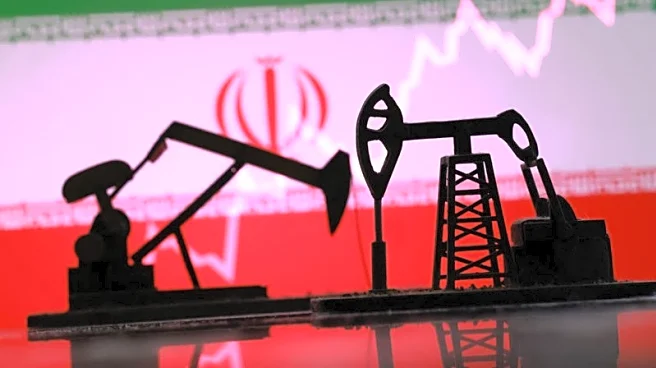
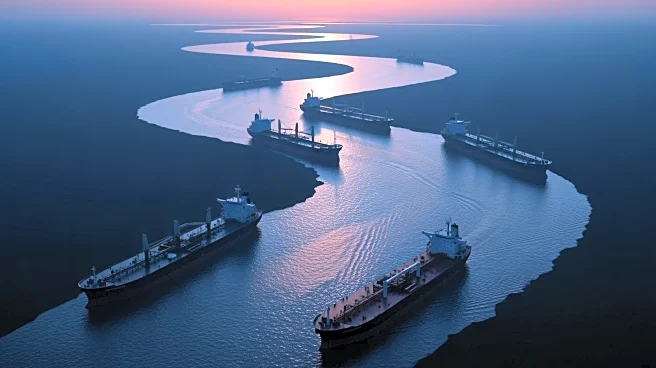
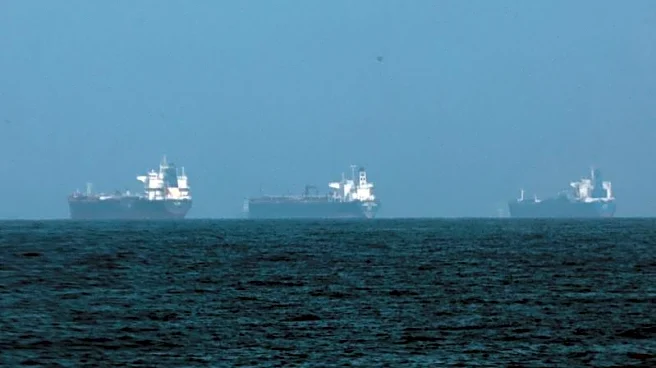
for maritime trade in the region. This move aims to alleviate pressure on foreign-flag shipowners and ensure the continued flow of Mideast oil and gas, particularly benefiting overseas markets like China. The U.S. Navy may also be tasked with escorting tankers through the Strait of Hormuz if necessary, echoing the 1980s Operation Earnest Will. This decision comes as global energy prices are under pressure, with Brent crude oil prices rising by 14% since the conflict's onset.
Why It's Important?
The U.S. initiative to provide risk insurance and potential naval escorts is crucial for maintaining stability in global energy markets, which are sensitive to disruptions in the Gulf region. The strategic Strait of Hormuz is a vital passage for natural gas and crude oil shipments, especially from Qatar and Saudi Arabia. By ensuring the free flow of energy, the U.S. aims to prevent further spikes in energy prices, which could have widespread economic implications. The policy also underscores the U.S.'s commitment to leveraging its economic and military power to influence global energy security.
What's Next?
If the U.S. Navy is tasked with escorting tankers, it could strain existing naval resources already engaged in regional operations. The practical availability of Navy escorts remains uncertain, as past missions have faced challenges in providing consistent protection. The situation may evolve as the U.S. continues its military campaign in the region, potentially affecting the availability of naval assets for escort duties. Stakeholders, including energy markets and international shipping companies, will closely monitor developments to assess the impact on global trade routes.