






What's Happening?
The State Agricultural Management and Extension Training Institute (SAMETI) recently organized a three-day training program aimed at promoting natural farming in the Northeast region of India. Held from May 28 to 30, the event was attended by Agricultural Technology
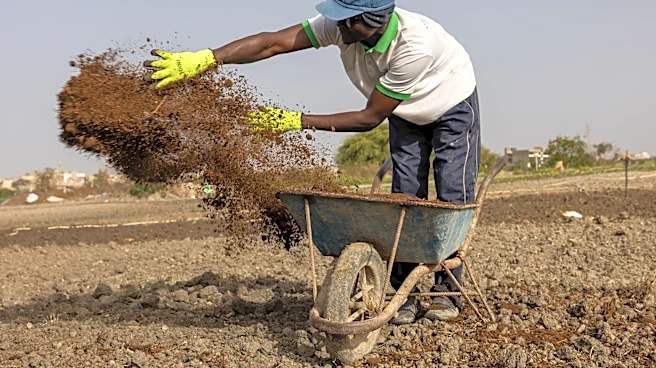
Management Agency (ATMA) functionaries. The program was inaugurated by Yezaho Swu, Deputy Project Director of SAMETI, and featured a keynote address by Bodevi Shuya, Director of SAMETI and Principal of the Institute of Extension Training and Communication (IETC). Shuya emphasized the importance of natural farming as a sustainable practice that utilizes local resources, organic inputs, and eco-friendly methods. The training covered various topics, including soil health restoration, water conservation, and reducing reliance on chemical inputs. Participants also learned about seed treatment, indigenous seed conservation, and integrated farming systems. The program concluded with practical demonstrations on preparing organic formulations like Jeevamrut and Beejamrut.
Why It's Important?
The promotion of natural farming is crucial for sustainable agricultural development in the Northeast region of India. By focusing on eco-friendly practices, the initiative aims to restore soil health, conserve water, and reduce dependency on expensive chemical fertilizers and pesticides. This approach not only ensures food security but also contributes to maintaining ecological balance and producing healthier food. The training program by SAMETI is significant as it equips local agricultural functionaries with the knowledge and skills needed to implement natural farming techniques effectively. This can lead to long-term benefits for farmers, including cost savings and improved crop yields, while also addressing environmental concerns.
What's Next?
Following the training, participants are expected to apply the knowledge gained in their respective areas, promoting natural farming practices among local farmers. SAMETI and other agricultural bodies may continue to support these efforts through additional training sessions and resources. The success of this initiative could lead to broader adoption of natural farming across the region, potentially influencing agricultural policies and practices at a national level. Monitoring and evaluation of the program's impact will be crucial in assessing its effectiveness and making necessary adjustments.
Beyond the Headlines
The shift towards natural farming in the Northeast region of India reflects a growing global trend towards sustainable agriculture. This movement is driven by the need to address environmental challenges such as soil degradation, water scarcity, and biodiversity loss. By adopting natural farming practices, the region can contribute to global efforts to combat climate change and promote sustainable development. Additionally, the focus on using indigenous knowledge and resources highlights the importance of preserving cultural heritage and traditional farming practices.