







What's Happening?
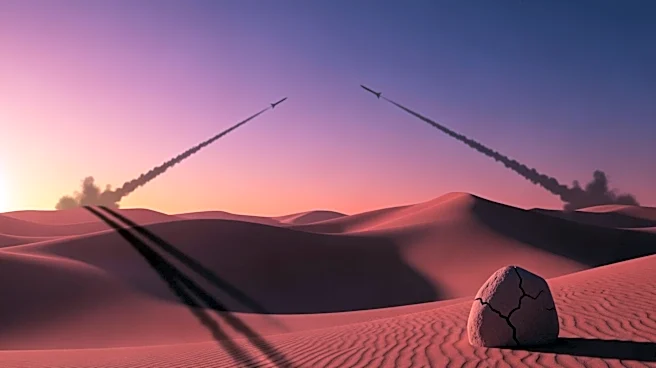
The United Arab Emirates has reported a second consecutive day of attacks from Iranian missiles and drones, although Iran's Islamic Revolutionary Guards Corps has denied involvement. The UAE's Defense Ministry claims the attacks have caused injuries and damage,
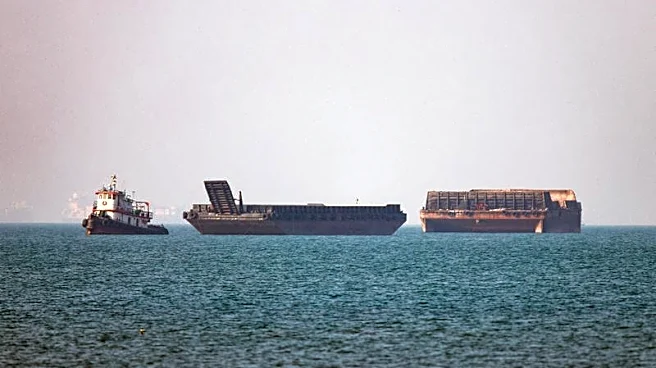
including a fire at an oil facility in Fujairah. The escalation follows joint U.S.-Israeli strikes on Iran in February, which led to Iran asserting control over the Strait of Hormuz. The U.S. has responded with a naval blockade, further straining relations and impacting global energy markets.
Why It's Important?
The ongoing conflict in the Strait of Hormuz, a critical passage for global oil exports, poses significant risks to international energy security. The UAE's strategic role as a major oil exporter means that continued hostilities could disrupt global supply chains and lead to increased oil prices. The denial from Iran adds complexity to the situation, as it raises questions about the true nature of the attacks and the potential for further escalation. The conflict also highlights the broader geopolitical tensions in the region, involving major powers like the U.S. and Israel.
What's Next?
The UAE may seek international support to address the attacks and ensure regional stability. The U.S. is likely to continue its naval operations to protect commercial shipping, which could provoke further Iranian responses. Diplomatic efforts may be necessary to de-escalate tensions and prevent a broader conflict. The international community will be closely monitoring the situation, particularly given the potential impact on global energy markets and regional security.