





What's Happening?
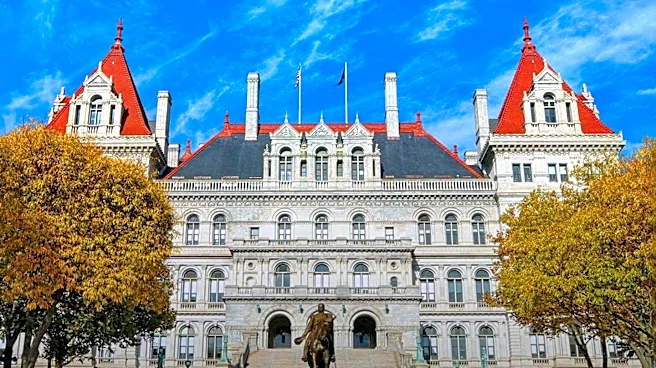
New York State has finalized the SAFE for Kids Act, a legislative measure aimed at protecting minors from addictive social media practices. Announced by Governor Kathy Hochul and Attorney General Letitia James, the law is set to take effect on January
25, 2027. It prohibits social media companies from presenting algorithmically personalized feeds to minors and restricts notifications between midnight and 6 a.m. The law requires parental consent for minors to override default settings and includes age-verification processes such as government ID checks and facial age estimation. Despite these measures, critics argue that age verification could infringe on privacy and freedom online. Similar laws in other states and countries have faced challenges, with minors finding ways to circumvent restrictions.
Why It's Important?
The SAFE for Kids Act represents a significant step in addressing the growing concern over social media's impact on youth mental health and addiction. By limiting algorithmic feeds and late-night notifications, the law aims to reduce the exposure of minors to potentially harmful content. However, the effectiveness of such legislation is debated, as minors have historically found ways to bypass restrictions. The law also raises privacy concerns due to age verification requirements, which could affect adults' ability to engage anonymously online. The act underscores the need for a balanced approach that involves not only legislative action but also active participation from parents, educators, and communities in safeguarding children from online harm.
What's Next?
As the SAFE for Kids Act prepares to go into effect, social media companies will need to adapt their platforms to comply with the new regulations. This may involve implementing cryptographic age verification systems to address privacy concerns. Parents and educators are encouraged to play a proactive role in monitoring and guiding minors' online activities. The law's success will likely depend on its enforcement and the ability of stakeholders to collaborate in creating a safer online environment for children. Other states may observe New York's approach and consider similar legislation, potentially leading to broader national discussions on social media regulation for minors.
Beyond the Headlines
The SAFE for Kids Act highlights the ongoing debate over the balance between technological innovation and user protection. While the law aims to protect minors, it also raises questions about the role of government in regulating online spaces and the potential impact on digital privacy. The act may prompt further exploration of alternative methods to safeguard children online, such as educational initiatives and community-based interventions. Additionally, the law could influence global conversations on social media regulation, as countries grapple with similar challenges in protecting youth from digital addiction and harmful content.