
What's Happening?
The White House has announced a new policy directing NASA, the Pentagon, and the Department of Energy to develop nuclear power systems for use on the moon. This initiative is part of NASA's broader plan
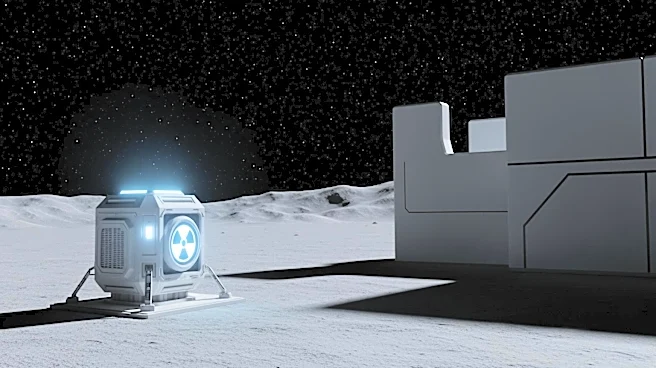
to establish a permanently staffed lunar base as a stepping stone for future Mars missions. The policy outlines the development of low- to mid-power space reactors, with the goal of launching a moon-orbiting nuclear power system by 2028 and deploying high-power reactors on the lunar surface by the next decade. The plan emphasizes the need for nuclear power due to the moon's long periods of darkness, which make solar power unreliable.
Why It's Important?
This policy marks a significant step in advancing U.S. capabilities in space exploration and energy independence. By developing nuclear power for lunar bases, the U.S. aims to ensure a sustainable presence on the moon, which is crucial for future missions to Mars. The initiative also reflects the strategic importance of maintaining technological superiority in space, as nuclear power offers a reliable energy source for long-duration missions. The collaboration between NASA, the Pentagon, and the DOE highlights the interdisciplinary approach needed to achieve these ambitious goals.
What's Next?
NASA and its partners will begin design competitions and collaborations with private companies to develop the necessary nuclear technologies. The Pentagon is expected to report on potential uses for space-based nuclear systems within 90 days. As these projects progress, they will likely face technical, regulatory, and budgetary challenges. The success of this initiative could pave the way for further advancements in space exploration and energy technology, potentially influencing international space policy and collaboration.