



What's Happening?
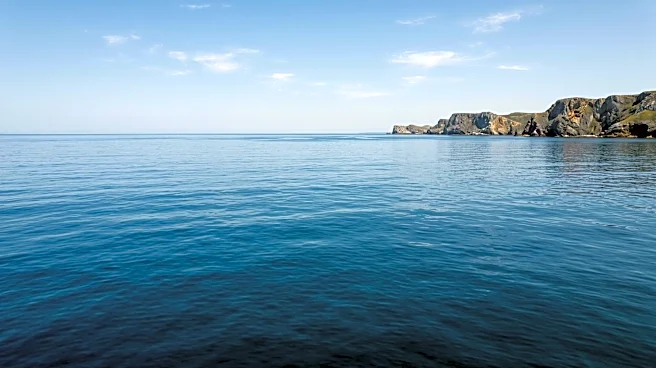
European seas recorded their hottest summer months since 1982, with an average temperature of 21.6 degrees Celsius between June and August, the highest in 45 years of data. The Bay of Biscay, off the Atlantic coasts of France and Spain, was particularly
affected, averaging 21.4 degrees Celsius during the same period, which is more than 2.4 degrees Celsius above its 1991-2020 average. Readings from the U.S. National Oceanic and Atmospheric Administration (NOAA) showed the Bay of Biscay peaked at 23.2 degrees Celsius on August 13, marking the highest temperature in the satellite era. Marine heatwaves are defined as five or more consecutive days of water temperatures significantly above an area's historical norm. Scientists indicate that these events are becoming more frequent, intense, and widespread due to greenhouse gas emissions increasing atmospheric temperatures globally. The world's oceans absorb the majority of this excess heat, retaining it longer than land or the atmosphere.
Why It's Important?
These intensifying marine heatwaves are profoundly transforming marine ecosystems, leading to catastrophic consequences for some European fisheries and the communities dependent on them. Species that have historically sustained coastal communities in regions like Spain and southern England are disappearing, while new species from warmer climates are surging into these newly hospitable waters. For instance, the Bay of Biscay, which averaged only a few heatwave days annually in the 1980s, recorded 185 heatwave days by the end of August this year. This shift impacts the availability of traditional catches and introduces new predators, such as Portuguese man o' war and triggerfish, which prey on local fish and crustaceans. The disappearance of vital habitats like kelp forests, which provide food and shelter for numerous species, further exacerbates the ecological and economic challenges faced by fishing communities.
What's Next?
The long-term trend indicates that marine heatwaves will continue to become more frequent and intense, driven by ongoing greenhouse gas emissions. This will likely lead to further shifts in marine biodiversity and continued pressure on traditional fisheries. Scientists and environmental activists are already collaborating with concerned fishermen to implement restoration efforts, such as planting kelp seedlings grown in laboratories, to mitigate some of the damage. However, the effectiveness of these localized efforts against a backdrop of global warming remains a significant challenge. The economic impact on the fishing industry is expected to grow, with potential losses in traditional catches being partially offset by new species, though not always to the benefit of all stakeholders. For example, an increase in common octopus landings in the English Channel has created a market in southern Europe but also led to significant losses in lobster, brown crab, and scallop catches.
Beyond the Headlines
The ecological shifts caused by marine heatwaves extend beyond immediate economic impacts on fisheries. The alteration of marine ecosystems can have cascading effects on the entire food web, potentially leading to unforeseen consequences for ocean health and biodiversity. The influx of new species and the decline of native ones can disrupt ecological balances that have been stable for centuries, posing complex challenges for conservation and resource management. This situation also highlights the interconnectedness of global climate patterns and local environmental conditions, underscoring the urgent need for comprehensive climate action. The struggle of fishing communities to adapt to these rapid changes also brings to light the social and cultural dimensions of climate change, as traditional ways of life and generational knowledge are threatened by environmental instability.