
What's Happening?
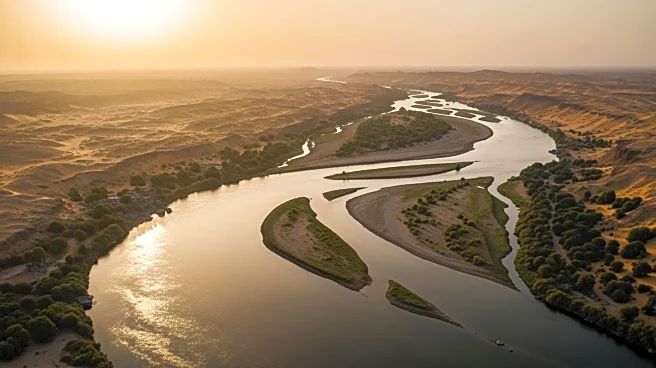
President Trump has extended an offer to mediate the ongoing Nile River water dispute between Egypt, Sudan, and Ethiopia. This offer comes in response to concerns from Egypt and Sudan regarding the Grand
Ethiopian Renaissance Dam (GERD), which Ethiopia has constructed on the Blue Nile. Egypt and Sudan fear that the dam could significantly reduce the flow of the Nile River, impacting their water supply and agriculture. Both countries have expressed their support for U.S. mediation, with Sudan's military chief, Gen. Abdel-Fattah Burhan, praising the initiative as a step towards sustainable solutions. Ethiopia has not yet commented on the offer. The dispute centers on the operation and filling of the dam's reservoir, with Egypt and Sudan seeking a legally binding agreement, while Ethiopia prefers guidelines.
Why It's Important?
The Nile River is a critical water source for Egypt and Sudan, and any reduction in its flow could have severe implications for their agriculture and water supply. The GERD is a significant infrastructure project for Ethiopia, aimed at increasing its electricity generation capacity. The dispute highlights the complex interplay of regional politics, resource management, and international diplomacy. Successful mediation by the U.S. could lead to a resolution that balances the needs of all parties involved, potentially setting a precedent for future transboundary water disputes. However, failure to reach an agreement could exacerbate tensions and lead to further regional instability.
What's Next?
If Ethiopia responds positively to President Trump's offer, negotiations could resume under U.S. mediation. The focus would likely be on reaching a compromise that addresses the concerns of all parties, particularly regarding the dam's operation during drought conditions and the method for resolving future disputes. The outcome of these negotiations could influence regional relations and set a framework for managing shared water resources in Africa.