


What's Happening?
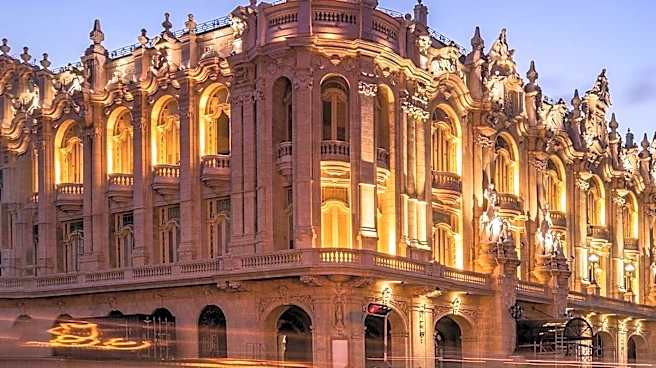
Havana recently marked its 507th anniversary with a large dance party at La Piragua, a public plaza on the Malecón, organized by the sociocultural project 'Retomando el Son Bailando Casino.' This celebration occurred despite the city facing severe urban
challenges, including over 536,000 residents without water, widespread power outages, and nearly 1,000 building collapses annually. While the project presents itself as independent, it operates with explicit support from various Cuban government ministries and entities, including the Ministry of Culture and the Ministry of Tourism. Critics view such mass celebrations, which have occurred in the past during periods of political tension or crisis, as an attempt by the regime to project an image of normalcy and social cohesion, instrumentalizing Cuban cultural identity to distract from the deteriorating living conditions and infrastructure failures.
Why It's Important?
This event highlights a recurring pattern in Cuba where cultural celebrations are utilized by the government to manage public perception during times of crisis. By promoting festive events, the regime aims to project stability and unity, potentially diverting attention from critical issues like inadequate public services and economic hardship. This strategy can be seen as a form of soft power, using cultural pride to foster a sense of national identity and resilience, even as citizens grapple with daily struggles. For the U.S., understanding these internal dynamics is crucial for assessing the effectiveness of its policies towards Cuba, as such events can influence the morale and political engagement of the Cuban populace. The contrast between official celebrations and the grim reality faced by many Havana residents underscores the complex social and political landscape within the country.
What's Next?
It is likely that the Cuban government will continue to employ similar strategies of organizing public cultural events to reinforce national unity and project an image of stability, especially as economic and social pressures persist. These events may become more frequent or more elaborate as a means to counter internal dissent or external criticism. International observers and human rights organizations will likely continue to highlight the disparity between official narratives and the lived experiences of Cuban citizens. The ongoing urban crisis in Havana, characterized by infrastructure decay and service shortages, will continue to demand attention, regardless of celebratory events. The government's ability to maintain public order and support through such cultural initiatives will be a key factor in its stability amidst ongoing challenges.
Beyond the Headlines
The instrumentalization of cultural identity for political purposes in Cuba raises broader questions about the role of art and celebration in authoritarian contexts. While culture can genuinely foster community and resilience, its deliberate deployment by a state to mask systemic failures or to deflect criticism can undermine its authentic expression. This practice can create a disconnect between the official narrative of national pride and the lived reality of citizens, potentially leading to cynicism or a deeper sense of disillusionment. The long-term impact of such strategies on a society's cultural fabric and its relationship with its government is significant, as it can blur the lines between genuine cultural expression and state propaganda. This dynamic also offers insights into how regimes maintain control and legitimacy in the face of severe internal challenges, using intangible assets like national identity as a tool for governance.