



What's Happening?
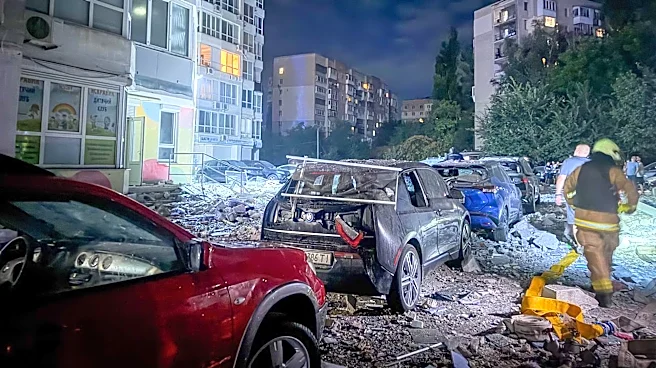
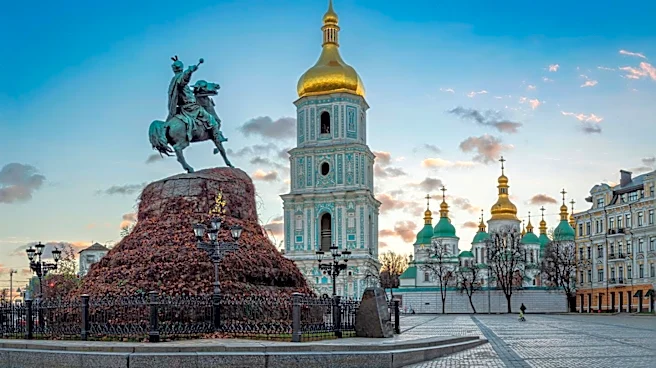
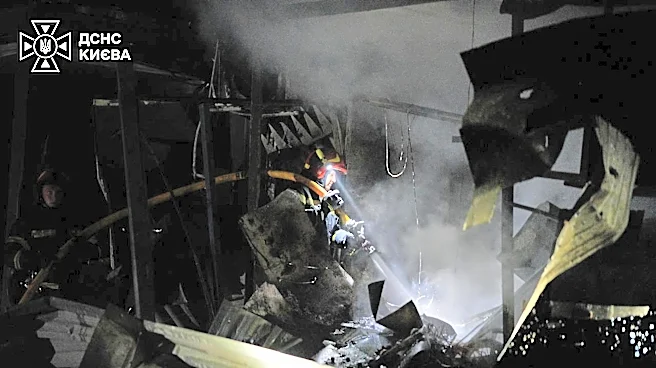
A shootout occurred in central Kyiv between two branches of Ukraine’s security services: the domestic security service (SBU) and the military intelligence directorate (HUR). Several individuals were injured in the incident, which Ukrainian President Volodymyr
Zelenskyy described as 'disgraceful.' The SBU stated that the clash 'definitely shouldn’t have happened' and is cooperating with state investigators. The confrontation reportedly stemmed from the SBU's arrest of a Russian man fighting for Ukraine under HUR supervision. Local media reports indicate that HUR officers arrived at an apartment being searched by the SBU in connection with the investigation, leading to an exchange of gunfire and injuries to three HUR officers. The SBU later released a video of the arrested Russian national, who claimed he was approached by a Russian intelligence agent to assassinate Ukrainian defense personnel. However, the man's lawyer alleged the video was recorded under duress to 'whitewash' the shootout. The man has since been released from SBU custody. Following the incident, President Zelenskyy dismissed Oleh Khramov, the SBU’s head of the department for the protection of state secrets.
Why It's Important?
This internal conflict within Ukraine's security apparatus is significant as it exposes deep-seated tensions and potential operational disunity at a critical time for the nation. Such incidents can undermine public trust in government institutions and create vulnerabilities that external adversaries could exploit. The President's strong condemnation and immediate personnel changes underscore the severity of the situation and the need to maintain a unified front, especially amidst ongoing military challenges. The incident also raises questions about the coordination and oversight of different security agencies, particularly concerning sensitive operations involving foreign nationals and alleged terrorist plots. For the U.S. and its allies, who provide substantial support to Ukraine, such internal strife could be a cause for concern regarding the stability and effectiveness of Ukrainian governance and its security sector reforms. It highlights the complex challenges Ukraine faces beyond the immediate conflict with Russia, including internal political dynamics and institutional integrity.
What's Next?
An investigation into the shootout has been launched by both the SBU and the HUR, as well as Ukraine’s main investigative agency. President Zelenskyy has emphasized that shooting is only permissible against Russian occupiers in defense of Ukraine, indicating a strong directive for internal discipline and unity. The outcome of these investigations will likely determine further accountability measures and potential reforms within the security services. The incident may also prompt a review of inter-agency protocols and communication channels to prevent future clashes. Politically, President Zelenskyy will need to manage the fallout carefully, especially given recent challenges to his authority, including calls for wartime elections and investigations into other high-ranking officials. The focus will be on restoring public confidence and ensuring that internal disputes do not detract from the primary objective of national defense against external aggression. International partners will be closely observing how Ukraine addresses these internal security challenges.
Beyond the Headlines
The shootout between Ukraine's security services points to a deeper struggle within the nation's institutional framework, potentially reflecting the pressures of prolonged conflict and the complexities of post-Soviet institutional reform. Such internal friction can have profound implications for national security, potentially diverting resources and attention from external threats. Ethically, the incident raises questions about due process, the use of force, and the integrity of intelligence operations, particularly concerning the alleged coercion of the arrested Russian national. Culturally, it could erode the sense of national unity and purpose that has been crucial for Ukraine's resilience. The long-term shift could involve a more centralized and tightly controlled security apparatus, or conversely, a push for greater transparency and accountability to prevent such incidents. This event underscores the multifaceted challenges faced by a nation at war, where internal cohesion is as vital as external defense, and where the line between national security and political maneuvering can become blurred.