





What's Happening?
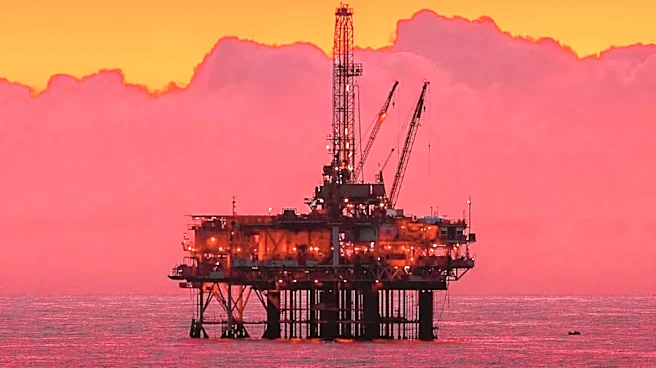
Researchers from Northern Arizona University have conducted the deepest ocean drilling study to date, uncovering a critical geological feature that contributed to the catastrophic 2011 earthquake and tsunami in Japan. By drilling into the seafloor beneath
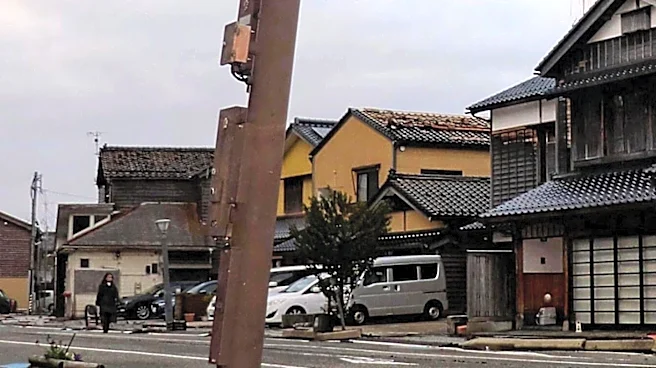
the Pacific Ocean, scientists discovered a thin, slippery layer of ancient clay beneath the Japan Trench. This layer allowed the fault to rupture all the way to the ocean floor, causing significant seafloor movement and triggering the massive tsunami. The study, published in Science, highlights how this clay-rich sediment played a pivotal role in the disaster, which resulted in nearly 20,000 deaths and over $200 billion in damages. The research involved drilling approximately 26,000 feet into the ocean floor to recover sediment samples, marking the deepest scientific ocean drilling project ever completed.
Why It's Important?
The discovery of the pelagic clay layer beneath the Japan Trench has significant implications for understanding and predicting future earthquakes and tsunamis. This geological feature, which stretches for hundreds of miles, suggests that the region may be more susceptible to shallow slip earthquakes than previously thought. By identifying such weak layers, scientists can better predict where large earthquakes and tsunamis might occur, potentially improving disaster preparedness and response strategies. This knowledge is crucial not only for Japan but also for other regions across the Pacific, such as Hawaii, which are vulnerable to tsunamis originating from distant seismic events.
What's Next?
The findings from this study could lead to advancements in earthquake and tsunami forecasting, enabling policymakers to enhance building codes, improve infrastructure resilience, and update evacuation plans. As Japan continues to lead in earthquake and tsunami preparedness, these insights could inform global strategies to mitigate the impact of such natural disasters. Researchers aim to further explore similar geological features in other regions to refine predictive models and enhance global safety measures against future seismic events.