




What's Happening?
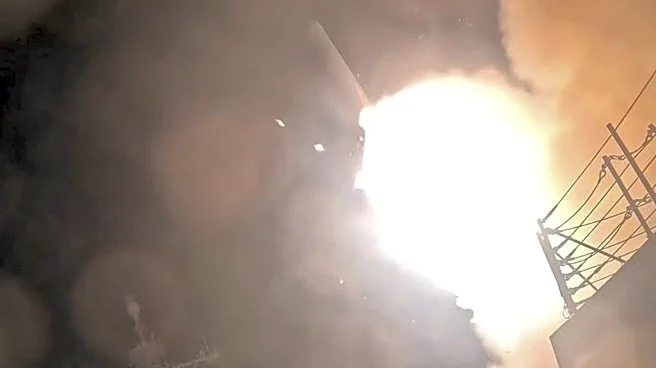
Iran has launched attacks on critical infrastructure in Kuwait, including a power generation plant, a water desalination plant, and several residential areas. The Kuwait Petroleum Corporation confirmed that one of its oil facilities suffered significant
damage due to repeated Iranian attacks, resulting in material damage and injuries. These actions are part of Iran's strategy to escalate tensions without provoking a larger response from Gulf neighbors. The attacks are seen as a response to U.S. military actions in the region, including strikes on Iranian infrastructure. Iran's Islamic Revolutionary Guard Corps claimed responsibility, alleging the attacks targeted U.S. military support centers in Kuwait. The situation reflects Iran's recalibrated objectives, focusing on regime survival and strategic positioning rather than maintaining détente with Gulf states.
Why It's Important?
The attacks on Kuwait's infrastructure highlight the fragile state of regional security and the potential for significant disruptions in global energy markets. Kuwait, hosting vital U.S. military infrastructure, is a strategic target for Iran, which aims to demonstrate its capability to impose costs on America's regional partners. This escalation could lead to increased political and strategic costs for the U.S., potentially affecting its foreign policy and military strategies in the Gulf. The attacks also underscore the vulnerability of energy infrastructure in the region, which could lead to shocks in global energy markets if disruptions persist. The situation is further complicated by the existing water crisis in Iran, exacerbating social unrest and adding another layer of complexity to the geopolitical landscape.
What's Next?
The ongoing tensions suggest a potential for further escalation if diplomatic solutions are not pursued. The U.S. and its allies may need to reassess their military and strategic positions in the Gulf to mitigate risks. Iran's actions indicate a willingness to continue its aggressive posture unless concessions are made by the U.S. This could lead to increased diplomatic efforts to de-escalate the situation, though the path forward remains uncertain. The international community may also need to address the broader implications for global energy security and regional stability.
Beyond the Headlines
The attacks on Kuwait's infrastructure reveal deeper geopolitical dynamics, including Iran's strategic calculations and its desire to avoid appearing isolated or strategically defeated. The situation also highlights the interconnectedness of regional security and global energy markets, where disruptions in one area can have far-reaching consequences. Additionally, the focus on infrastructure rather than direct military targets suggests a shift in Iran's tactical approach, aiming to leverage its regional influence while avoiding direct confrontation with the U.S. This development could lead to long-term shifts in regional alliances and power structures.