

What's Happening?
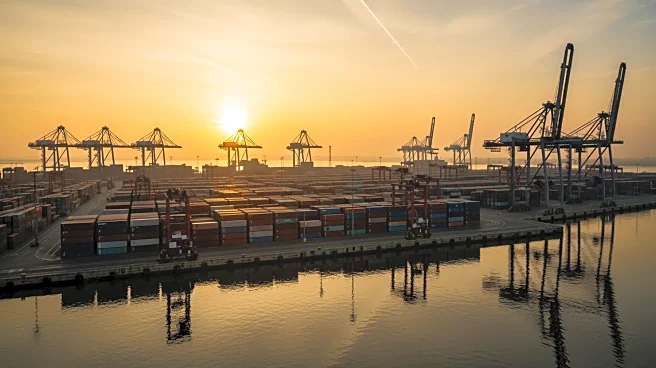
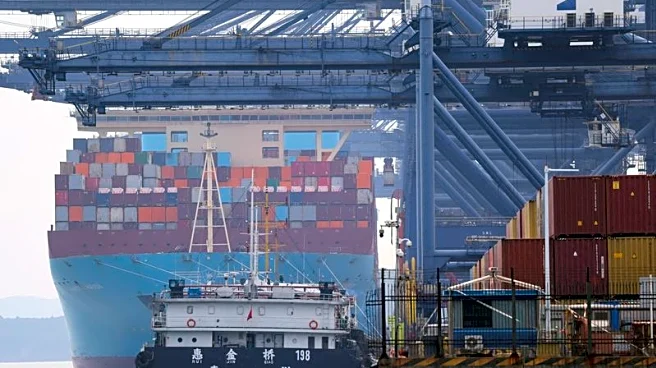
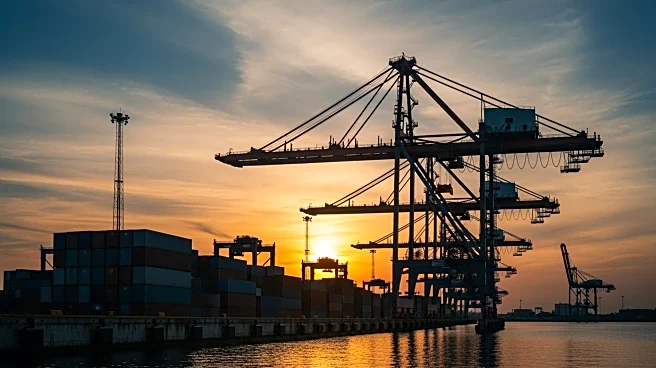
Panama has officially annulled port contracts held by CK Hutchison, a Hong Kong-based conglomerate, transferring interim control of the Balboa and Cristobal terminals to Danish shipping company A.P. Moller-Maersk and Swiss-based Mediterranean Shipping
Co. This decision follows a Supreme Court ruling that deemed the concessions unconstitutional. The Panamanian government has taken over the port facilities to ensure uninterrupted operations until a new concession is awarded within 18 months. CK Hutchison, which had operated these terminals for over two decades, has ceased operations and is consulting legal advisors regarding the ruling. The company has described the executive decree as unlawful and is considering legal recourse.
Why It's Important?
This development is significant as it represents a geopolitical shift in control over key maritime infrastructure near the Panama Canal, a critical global trade artery. The annulment of CK Hutchison's contracts and the transfer of control to Maersk and MSC align with U.S. interests in limiting China's influence in strategic locations. The move could impact China's Belt and Road Initiative, which aims to expand its global infrastructure footprint. For Panama, this decision may have political and economic repercussions, as Beijing has warned of potential consequences. The situation underscores the complex interplay between global trade, national sovereignty, and international relations.
What's Next?
The Panamanian government plans to award a new concession for the port operations within 18 months. Meanwhile, CK Hutchison is likely to pursue legal action to contest the annulment of its contracts. The outcome of these legal proceedings could influence future foreign investments in Panama and other countries with strategic infrastructure. Additionally, the response from China, which has already urged its state firms to halt new projects in Panama, will be closely watched. The situation may also prompt other nations to reassess their agreements with Chinese companies, potentially affecting global trade dynamics.