






What's Happening?
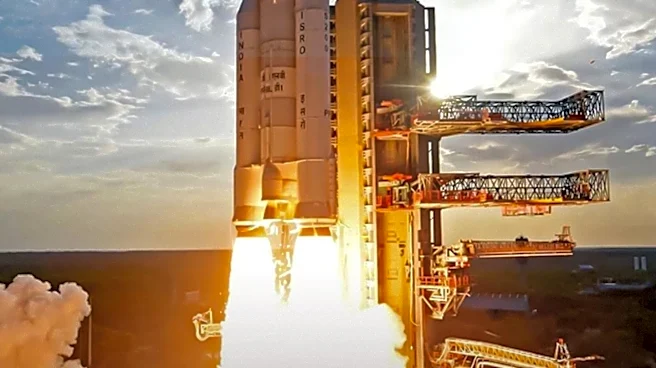
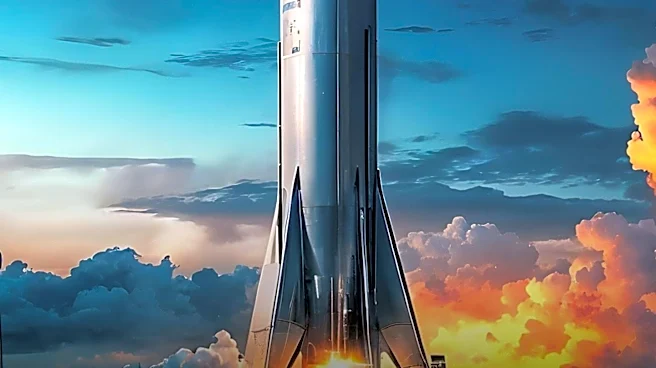
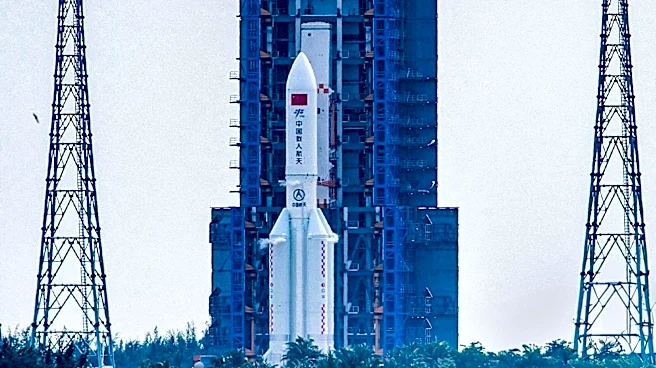
China's Gravity-1 rocket, the world's most powerful solid-fuel rocket, successfully launched nine satellites from a ship at sea. This marks the third successful mission for the Gravity-1, operated by Orienspace, a company based in Shandong. The launch took
place off the coast of Shanghai, with all satellites reaching their designated orbits. The rocket, notable for its solid rocket motors and sea-based launch capability, stands at 100 feet tall and can carry significant payloads to low Earth orbit.
Why It's Important?
The successful deployment of satellites via sea launch demonstrates China's growing capabilities in space technology and innovation. This method offers flexibility and efficiency, potentially reducing costs and increasing launch frequency. The mission highlights China's strategic advancements in space exploration, positioning it as a key player in the global space race. The ability to launch from sea platforms could lead to more frequent and diverse satellite deployments, impacting global communications and data collection.
What's Next?
Orienspace plans to continue developing its rocket technology, with future launches expected to include more advanced models like Gravity-2 and Gravity-3. These developments could further enhance China's space capabilities, with potential applications in both commercial and governmental sectors. The success of these missions may encourage other nations to explore similar technologies, fostering international competition and collaboration in space exploration.
Beyond the Headlines
The use of sea-based launches raises questions about environmental impacts and regulatory frameworks. As more countries pursue similar technologies, international guidelines may need to be established to ensure sustainable and responsible space exploration practices.