
What's Happening?
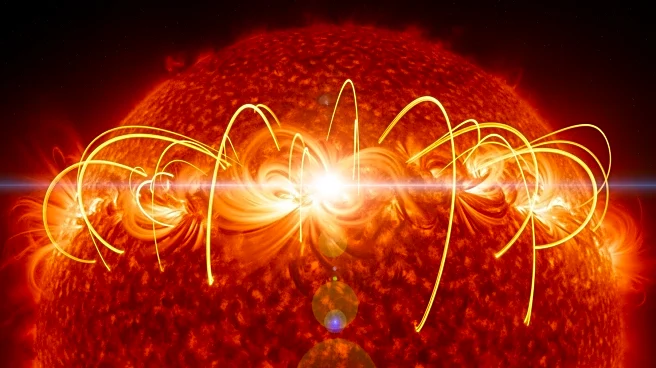
A strong solar flare erupted from the Sun on January 18, 2026, peaking at 1:09 p.m. EST. The event was captured by NASA's Solar Dynamics Observatory, which continuously monitors the Sun. The flare, classified
as an X1.9, is among the most intense types of solar flares. These flares can significantly impact radio communications, electric power grids, navigation signals, and pose risks to spacecraft and astronauts. The Solar Dynamics Observatory provided detailed video footage of the flare, showcasing it in various wavelengths to highlight the extremely hot material involved.
Why It's Important?
Solar flares like the one observed can have profound effects on Earth's technological infrastructure. They can disrupt communication systems, affect power grids, and pose hazards to satellites and astronauts in space. Understanding and predicting solar activity is crucial for mitigating these risks. NASA's continuous monitoring of the Sun helps provide valuable data for space weather forecasting, which is essential for preparing and protecting critical systems on Earth. This event highlights the ongoing need for research and investment in space weather prediction to safeguard technological assets and human life.