







What's Happening?
Blackstone, KKR, and Brookfield have finalized an agreement to acquire a 49% stake in a joint venture associated with Kuwait's national oil pipeline network. This transaction, valued at approximately $16 billion, marks the largest foreign investment in Kuwait's history.
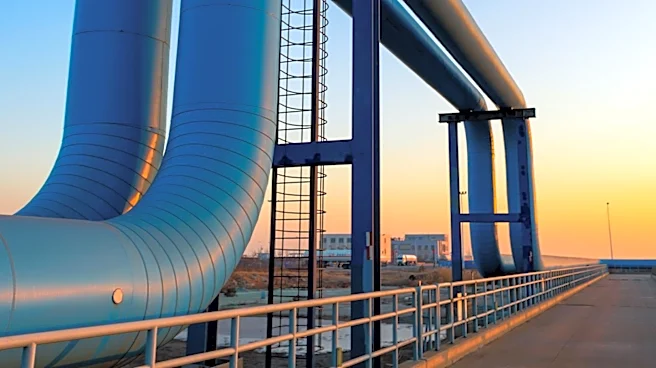
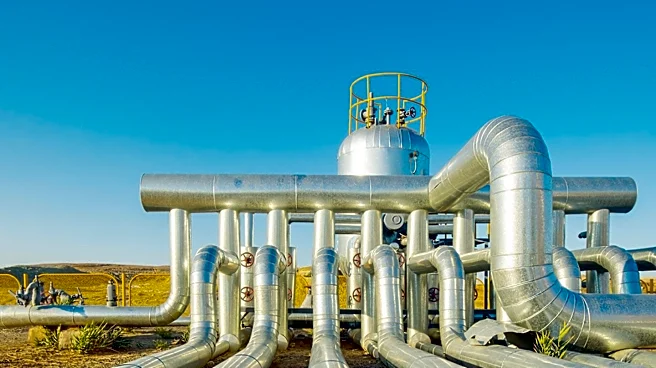
The deal involves the leasing of Kuwait's 320km pipeline network under a long-term arrangement, with the Kuwait Petroleum Corporation (KPC) retaining operational rights. The proceeds from this investment, nearly $8 billion, are intended to bolster Kuwait's energy infrastructure and increase its crude oil production capacity to 4 million barrels per day by 2035. This move comes amid regional tensions and attacks on critical infrastructure, prompting Kuwait to seek international investment to strengthen its financial position.
Why It's Important?
This investment is significant as it underscores the growing interest of international investors in the Middle East's energy sector, particularly in strategic infrastructure assets. For Kuwait, this deal not only provides substantial financial inflow but also signals international confidence in its economic stability despite regional challenges. The involvement of major global investors like Blackstone, KKR, and Brookfield highlights the potential for further foreign investments in the region. Additionally, the transaction aligns with Kuwait's broader strategy to diversify its economy and enhance its energy production capabilities, which is crucial for its long-term economic sustainability.
What's Next?
Following this investment, Kuwait is expected to focus on utilizing the proceeds to enhance its energy infrastructure and production capacity. The country may continue to seek similar investments to further diversify its economy and strengthen its financial resilience. The success of this deal could encourage other Gulf states to pursue similar strategies, potentially leading to increased foreign investments in the region's energy infrastructure. Stakeholders, including international investors and regional governments, will likely monitor the outcomes of this transaction closely to assess its impact on regional economic dynamics.