




What's Happening?
Governor Kay Ivey of Alabama has signed House Bill 1 and Senate Bill 1, allowing her to call special elections in congressional and state senate districts if redistricting legislation is passed. This move comes as Alabama petitions the U.S. Supreme Court
to allow the use of its 2023 congressional map for upcoming elections. A federal panel previously ruled that the state's map likely violated voting rights protections, but Alabama officials argue that a recent Supreme Court decision could alter this outcome. The state is seeking a stay to avoid using what it considers an unconstitutional map, with the primary election approaching.
Why It's Important?
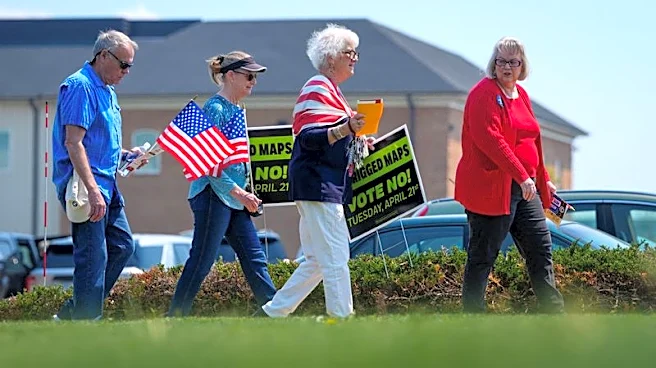
The redistricting dispute in Alabama is significant as it could affect the political landscape and representation in the state. The outcome of this legal battle may set a precedent for how voting rights and district maps are handled nationwide. If Alabama succeeds in its petition, it could influence similar cases in other states, potentially impacting the balance of power in Congress. The situation underscores the ongoing national debate over voting rights and gerrymandering, with potential implications for future elections and legislative control.
What's Next?
The U.S. Supreme Court's decision on Alabama's petition will be crucial in determining the state's electoral map for upcoming elections. If the court rules in favor of Alabama, the state could implement its preferred map, possibly altering election outcomes. Conversely, a decision against Alabama may require the state to adhere to the court-ordered map, affecting candidate strategies and voter representation. Stakeholders, including political parties and civil rights groups, will closely monitor the case, as its resolution could influence redistricting efforts across the country.