



What's Happening?
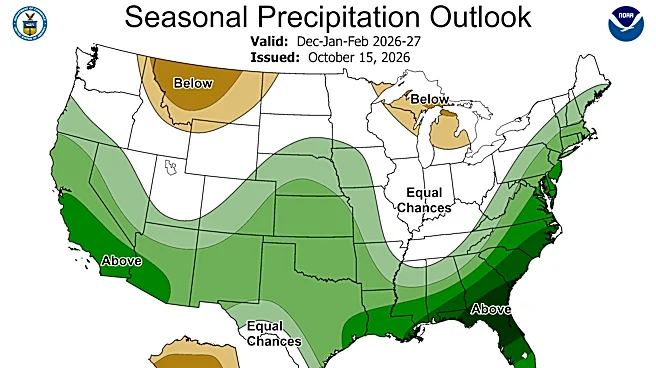
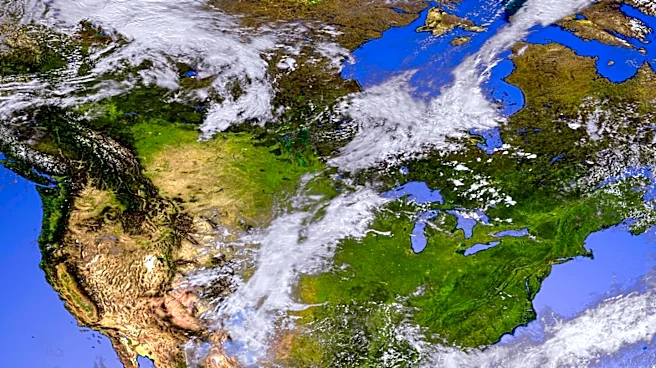
El Niño, the warm phase of the El Niño-Southern Oscillation (ENSO) cycle, is anticipated to significantly influence winter weather across the United States. According to NOAA’s U.S. Winter Outlook, this climate pattern typically brings milder weather to the northern
U.S. states and wetter conditions to the southern U.S. and along the East Coast. El Niño forms when sea surface temperatures in the central and eastern tropical Pacific are at least 0.5 degrees Celsius above normal for five consecutive three-month periods. The current El Niño is strengthening and is expected to remain strong to very strong through the January-March period. This phenomenon alters where ocean heat is released into the atmosphere, thereby influencing global circulation, temperatures, and precipitation patterns.
Why It's Important?
The projected El Niño-driven weather patterns have diverse impacts across the U.S. For northern states, milder winters can lead to reduced heating costs for households and businesses, potentially easing energy demands. However, it could also mean less snow for winter sports industries and ecosystems reliant on snowpack. In contrast, the southern U.S. and East Coast are bracing for wetter conditions, which could alleviate drought in some areas but also increase the risk of flooding and severe weather events. This dual impact necessitates varied preparedness strategies across different regions. Industries such as agriculture, transportation, and construction will need to adapt to these forecasted conditions, influencing everything from crop planning to infrastructure maintenance.
What's Next?
As the strong El Niño continues, NOAA and other meteorological agencies will provide updated forecasts to help communities and industries prepare. Northern states should anticipate a winter with fewer extreme cold snaps, while southern and eastern regions should prepare for increased precipitation, potentially including more frequent storm systems. Emergency management services will likely focus on flood preparedness in the South and East. Businesses and individuals across the country will need to consider these weather shifts in their planning, from energy consumption to travel arrangements. The ongoing strength of this El Niño event underscores the importance of continuous monitoring and adaptive strategies for managing its widespread effects.
Beyond the Headlines
The influence of El Niño on U.S. winter weather highlights the interconnectedness of global climate systems and their regional manifestations. While El Niño is a natural cycle, its intensity and interaction with long-term climate change can lead to unprecedented weather events. The contrasting impacts across the U.S.—milder in the North, wetter in the South—underscore the complex and often uneven distribution of climate effects. This situation prompts a deeper examination of regional vulnerabilities and the need for tailored climate adaptation plans. It also reinforces the value of scientific forecasting in providing crucial lead time for preparedness, allowing communities to build resilience against the economic and social disruptions caused by significant weather shifts.