






What's Happening?
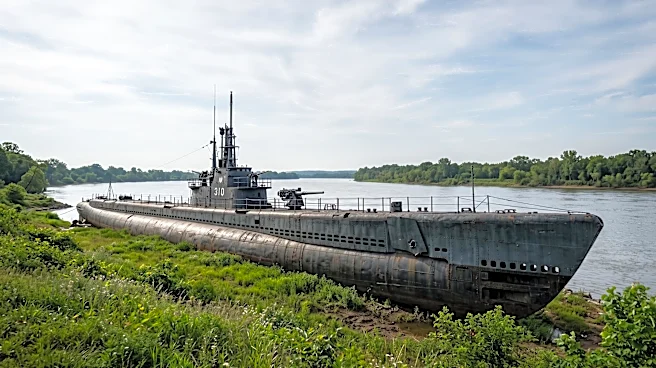
The USS Batfish, a 3.2-million-pound World War II submarine serving as a museum exhibit in Muskogee, Oklahoma, must be relocated from its current resting place on the Arkansas River bank. The submarine, which floated 75 feet from its moorings during a 2019
flood, is now in the path of a levee construction project. The Muskogee War Memorial Authority announced on September 16 that it has secured $7 million and is preparing to solicit bids from contractors for the complex moving operation. The Batfish has been on the riverbank since the early 1970s, having been transported upriver from New Orleans. Its current predicament is compounded by a scour hole that developed under its forward section in 2021, requiring $210,000 to fill. The museum has been closed to the public since the 2019 flood, severely impacting its visitor numbers.
Why It's Important?
The relocation of the USS Batfish is a significant undertaking due to the submarine's immense size and weight, as well as the logistical challenges of moving it from land to a new berth. The project highlights the ongoing costs and complexities associated with preserving historical naval vessels, especially those situated far from traditional maritime environments. The estimated cost of the move, potentially ranging from $25.4 million to $28 million according to a 2023 study, far exceeds the $7 million currently secured, indicating a substantial funding gap. This situation impacts the Muskogee War Memorial Authority, which relies on the submarine as its primary attraction, and raises questions about the long-term financial sustainability of such historical preservation efforts. The project also involves coordination with the Army Corps of Engineers and addresses environmental and archaeological sensitivities along the proposed route.
What's Next?
The Muskogee War Memorial Authority is preparing to issue bids for contractors to undertake the relocation of the USS Batfish. The bidding process will determine the actual cost of the move and the specific methods contractors propose, which could include using multi-axle trailers with custom cradles, requiring temporary power line shutdowns, and constructing ramps for water transit. The authority will need to secure additional funding beyond the current $7 million, as initial estimates suggest the total cost could be much higher. Furthermore, approval from the Army Corps of Engineers for the relocation plan is still pending. The move's timeline remains uncertain, as such complex operations involving historical vessels often face delays. The successful relocation is crucial for the reopening of the museum and the continued preservation of this significant World War II artifact.
Beyond the Headlines
The saga of the USS Batfish in Oklahoma underscores the unique challenges of maintaining naval history in unexpected locations. Its journey from active service to a landlocked museum, and now its forced relocation, reflects broader themes of historical preservation, community identity, and the impact of environmental changes like flooding. The financial strain on a local memorial authority to manage such a large artifact highlights the need for sustained public and private support for historical sites. The technical complexities of moving a 3.2-million-pound submarine across land and water also serve as a testament to modern engineering capabilities, while simultaneously revealing the intricate planning required for such specialized heavy-haul operations. This event could prompt discussions on the long-term viability and funding models for similar historical exhibits across the nation.