

What's Happening?
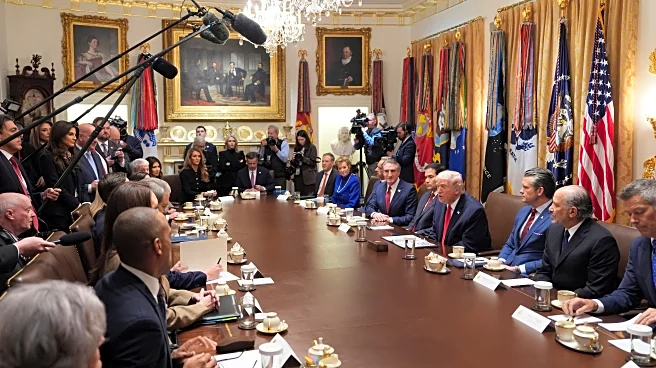
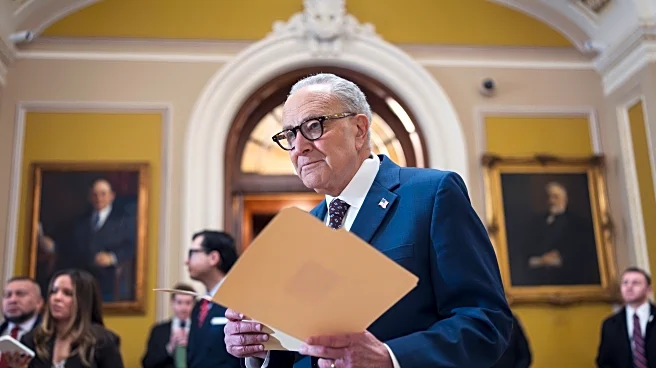
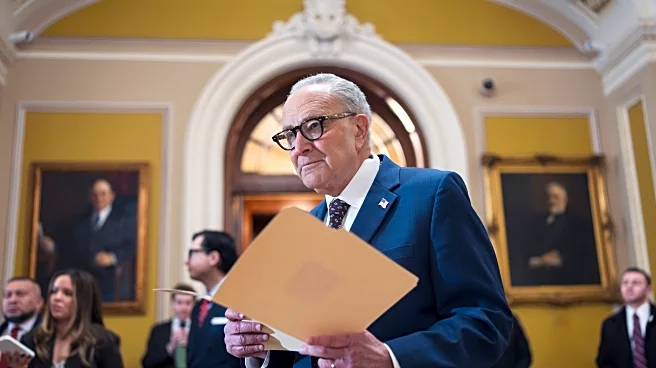
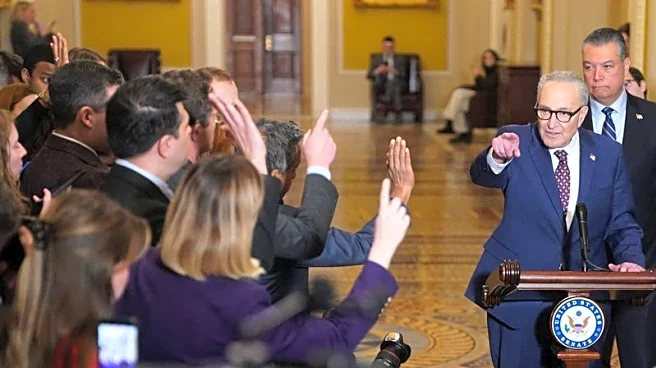
President Trump has swiftly negotiated a deal with Senate Democrats to prevent a prolonged government shutdown, marking a significant shift from his previous stance during last year's record shutdown. The agreement, reached with Senate Democratic leader
Chuck Schumer, aims to fund most of the government through September, excluding the Department of Homeland Security (DHS), which will be funded for only two weeks. This temporary measure allows for further debate on immigration reforms. The urgency of the deal is underscored by recent controversial shootings in Minneapolis involving federal immigration officers, which have intensified public scrutiny of Trump's immigration policies. The shootings have led to calls for investigations and reforms, with Democrats demanding stricter oversight of immigration enforcement.
Why It's Important?
The deal is crucial as it seeks to prevent another damaging government shutdown, which could have significant political and economic repercussions. The previous shutdown negatively impacted the Republican Party, and with upcoming elections, maintaining government operations is vital for their political strategy. The controversy surrounding immigration enforcement, highlighted by recent incidents, poses a challenge to Trump's hard-line immigration stance. The deal reflects a need to address public concerns and potentially reshape immigration policies. The outcome of these negotiations could influence public opinion and voter behavior, impacting both parties' standings in the upcoming elections.
What's Next?
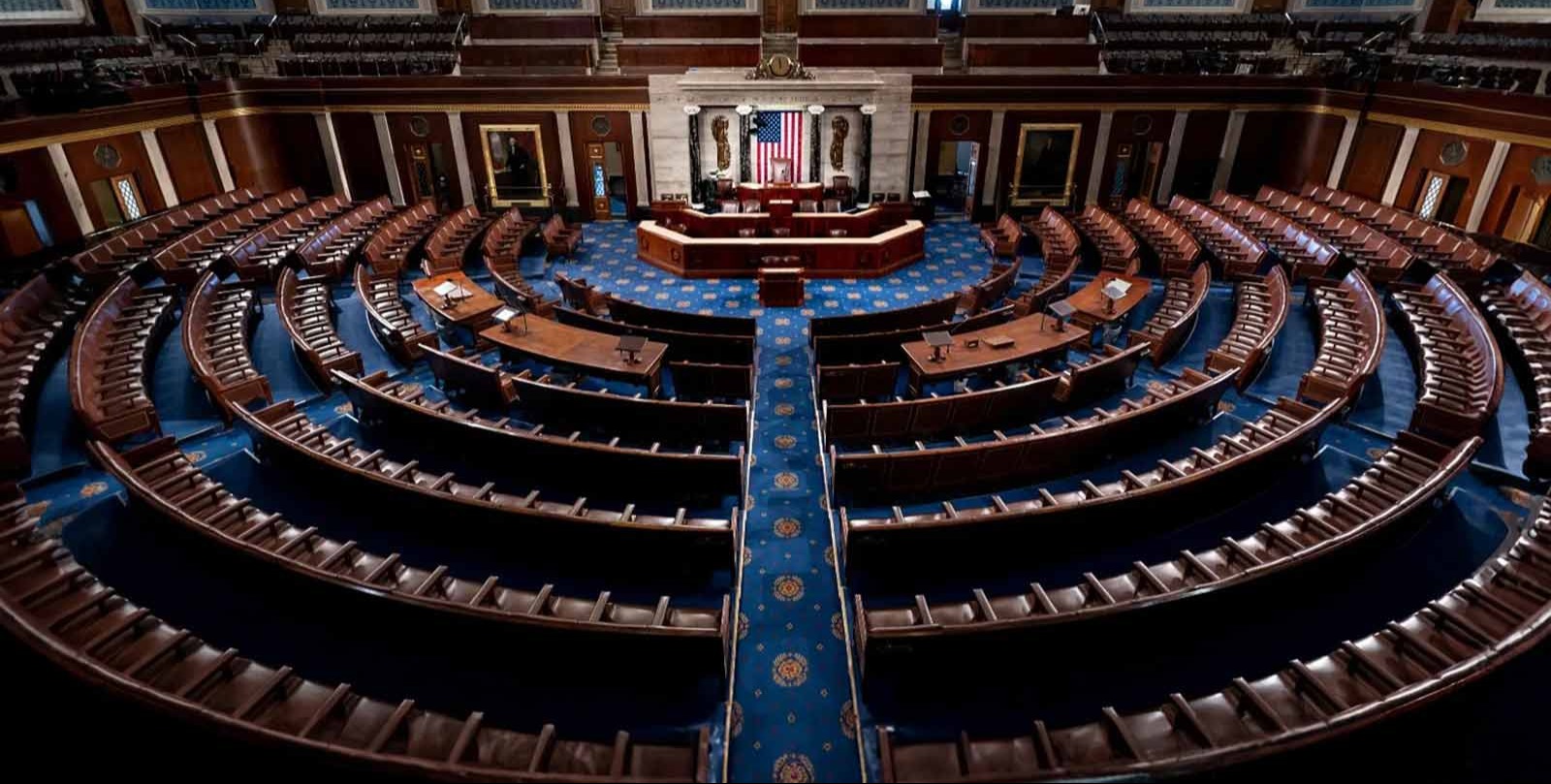
The House is set to vote on the funding package, and if passed, it will avert a shutdown for most federal departments. However, the temporary funding for DHS means that Congress must continue negotiations to address immigration enforcement issues. Democrats are pushing for reforms, including body cameras for immigration agents and better coordination with local law enforcement. Republicans, while divided, are preparing to introduce their own measures, such as restrictions on sanctuary cities, to support Trump's policies. The next two weeks will be critical as lawmakers work to bridge deep divides and find a long-term solution for DHS funding.