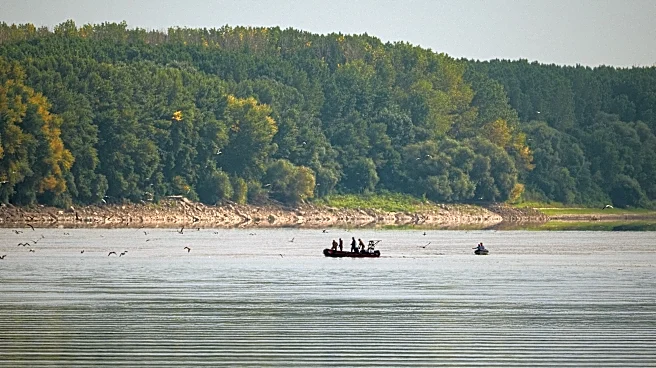









What's Happening?
The Danube River's water levels have dropped significantly due to drought, revealing World War II German battleships and ancient mammoth bones. The low water levels have exposed at least 20 shipwrecks near Prahovo, Serbia, remnants of Nazi Germany's Black
Sea fleet. These ships were deliberately sunk in 1944 to slow Soviet advances. The drought has also uncovered mammoth bones in Bulgaria, believed to belong to a young woolly mammoth from the Ice Age. The situation has prompted concerns about power plant operations and electricity conservation in Central and Eastern Europe.
Why It's Important?
The exposure of WWII shipwrecks and mammoth bones due to the Danube's low water levels highlights the broader impacts of climate change and extreme weather conditions. The situation underscores the need for sustainable water management and energy conservation strategies in the region. Additionally, the discovery of historical artifacts and fossils provides valuable insights into past events and ecosystems, offering opportunities for scientific research and historical preservation.
What's Next?
Authorities in the region are likely to continue monitoring water levels and implementing measures to ensure safe navigation on the Danube. Efforts to preserve and study the exposed shipwrecks and mammoth remains may be initiated, involving historians and archaeologists. The situation may also prompt discussions on climate change mitigation and adaptation strategies to address the challenges posed by extreme weather events.