




What's Happening?
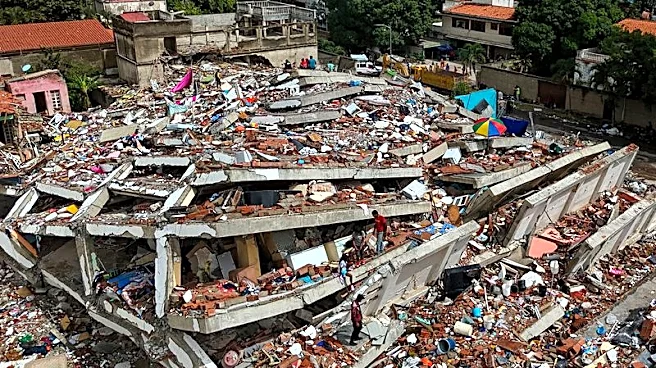
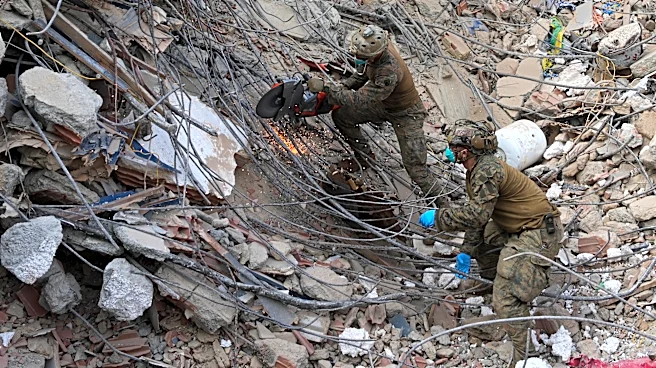
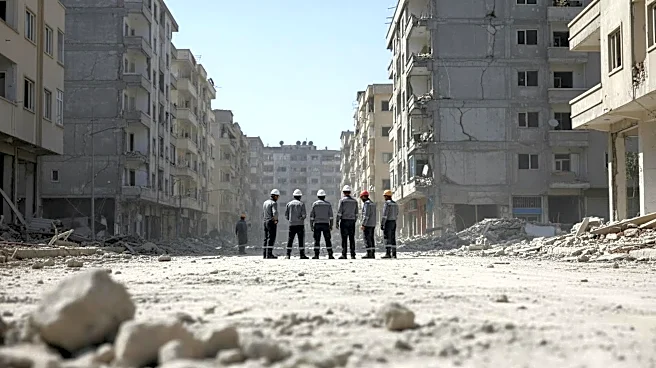
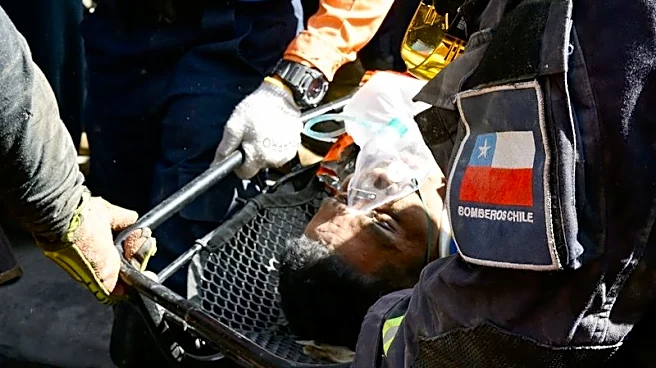
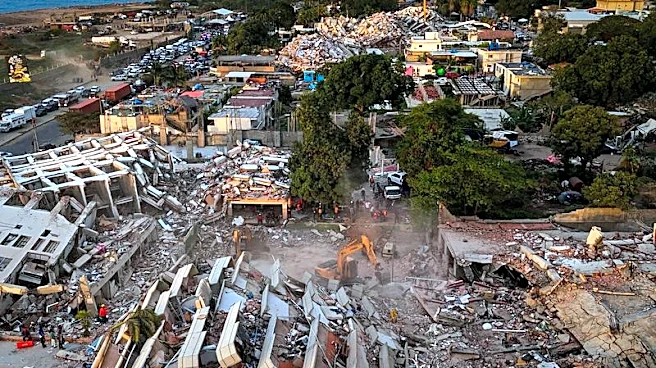
In Venezuela, rescue teams have been working tirelessly to find survivors following two devastating earthquakes that struck on June 24, with magnitudes of 7.2 and 7.5. A significant moment of hope emerged when Hernán Alberto Gil Flores, a 43-year-old
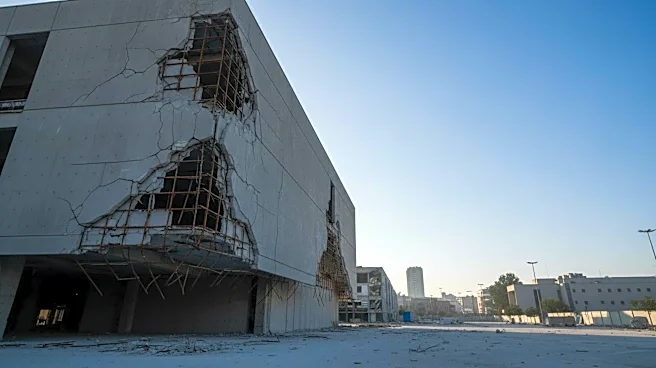
security guard, was rescued alive from the rubble of the Galerías Playa Grande shopping center in La Guaira after being trapped for eight days. The earthquakes have resulted in over 2,200 deaths and more than 11,000 injuries. The Venezuelan government, led by acting President Delcy Rodríguez, has faced criticism for its response to the disaster, which many have described as slow and disorganized. Despite these criticisms, the government claims to have activated rescue efforts immediately. The U.S. has supported Venezuela with financial aid and military personnel to assist in the relief efforts.
Why It's Important?
The earthquakes in Venezuela have highlighted significant challenges in disaster response and governance. The criticism of the Venezuelan government's handling of the crisis underscores the ongoing political instability in the country. The U.S. involvement, including financial aid and military support, reflects its strategic interest in Venezuela, especially following the ousting of former President Nicolás Maduro. The situation also raises concerns about the potential for a humanitarian crisis, given the already strained healthcare system in Venezuela. The international community's response and the Venezuelan government's ability to manage the aftermath will be crucial in determining the country's recovery trajectory.
What's Next?
As the immediate rescue efforts continue, the focus will likely shift to long-term recovery and rebuilding. The Venezuelan government will need to address the criticisms of its response to restore public confidence. Additionally, the political implications of the disaster response could influence the future of Delcy Rodríguez's leadership, especially with her mandate as acting president nearing its expiration. The U.S. and other international stakeholders will continue to play a role in the relief efforts, and their involvement may shape future diplomatic relations with Venezuela.
Beyond the Headlines
The earthquakes have exposed vulnerabilities in Venezuela's infrastructure and emergency preparedness. The disaster could lead to a reevaluation of building codes and disaster response protocols. Furthermore, the political dynamics in Venezuela, including the U.S. support for Rodríguez, may have long-term implications for the country's governance and international relations. The situation also highlights the ethical considerations of deportation policies, as seen in the tragic case of Daniel Alejandro Núñez Ramírez, a deportee who perished in the earthquakes.