






What's Happening?
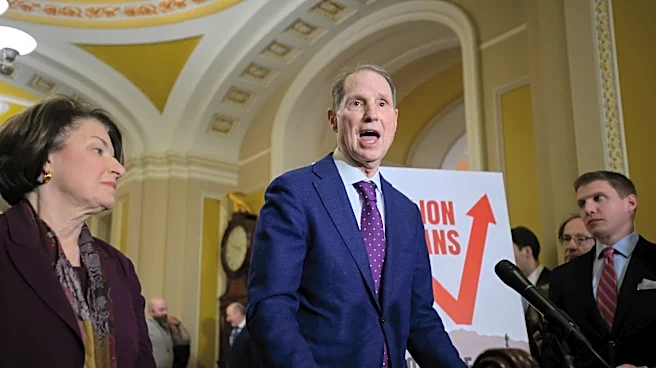
Women's Health Capitol Hill Day saw dozens of advocates gather to address lawmakers about the significant gaps in research and treatment for women's health. Organized by the Women's Health Advocates (WHA), the event aimed to influence the FY2027 appropriations
process by engaging bipartisan members of Congress. The group, founded by lobbyist Liz Powell, is pushing for increased funding for women's health research, including $200 million for an interdisciplinary research fund and $115 million for the Office of Research on Women's Health. The advocates are also seeking legislative support for the Find It Early Act, which aims to ensure accessible breast cancer screening, and CMS Reimbursement Parity to address gender disparities in medical procedure reimbursements. The event highlighted the impact of previous NIH funding cuts under the Trump administration, which have disproportionately affected women's health research.
Why It's Important?
The lobbying efforts underscore the ongoing struggle to prioritize women's health in federal budgets and policy-making. The proposed funding and legislative changes could significantly enhance research and treatment options for women, addressing long-standing disparities in healthcare. By securing bipartisan support, the advocates aim to rectify the historical underfunding of women's health research, which has been a persistent issue across administrations. The potential increase in funding and policy changes could lead to better healthcare outcomes for women, particularly in areas like menopause research and early cancer detection. This movement also reflects a broader societal push for gender equity in healthcare, with implications for public health policy and the healthcare industry.
What's Next?
The WHA's efforts may lead to increased legislative activity around women's health issues, with potential hearings and votes on the proposed funding and policy changes. The bipartisan support suggests a growing recognition of the importance of women's health, which could result in more comprehensive healthcare reforms. If successful, these initiatives could set a precedent for future healthcare policies, emphasizing the need for gender-specific research and treatment. The WHA plans to continue its advocacy, potentially expanding its reach and influence in Congress. The outcome of these efforts will likely depend on the political climate and the willingness of lawmakers to prioritize women's health in the upcoming budget negotiations.
Beyond the Headlines
The advocacy for women's health funding highlights deeper issues of gender inequality in healthcare. The historical underfunding of women's health research reflects broader societal biases that have marginalized women's health needs. Addressing these disparities requires not only increased funding but also a cultural shift in how women's health is perceived and prioritized. The WHA's efforts could contribute to this shift by raising awareness and fostering a more inclusive approach to healthcare policy. Additionally, the focus on women's health could inspire similar movements in other areas of healthcare, promoting a more equitable and comprehensive healthcare system.