


What's Happening?
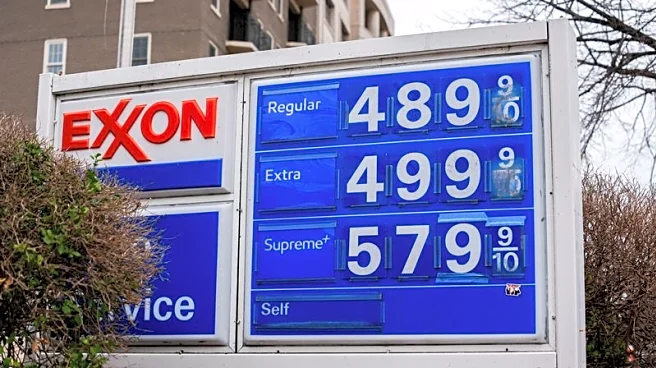
In response to rising gasoline prices due to the conflict with Iran, the Trump administration has issued a 60-day waiver of the Jones Act. This law mandates that goods shipped between U.S. ports must be transported on American-made and crewed vessels.
The waiver allows foreign-flagged ships to operate in domestic shipping routes, potentially reducing costs and speeding up deliveries. The decision is part of broader efforts to stabilize the oil market, which has been disrupted by Iran's blockade of the Strait of Hormuz, a key oil supply route.
Why It's Important?
The waiver is a strategic attempt to alleviate economic pressure from soaring fuel prices, which have been exacerbated by geopolitical tensions. By opening domestic shipping routes to foreign vessels, the administration aims to enhance supply chain efficiency and provide some relief at the gas pump. However, experts suggest that the impact on prices may be minimal, as oil costs are largely determined by global market dynamics. The decision has sparked debate over the Jones Act's relevance, with some advocating for its repeal to improve market efficiency and reduce costs.
What's Next?
The temporary waiver will be closely monitored to assess its effectiveness in reducing gasoline prices. The administration may consider extending the waiver or implementing additional measures if the conflict in Iran continues to disrupt oil supplies. The decision could also prompt further discussions on the long-term viability of the Jones Act, with stakeholders evaluating its impact on domestic trade and energy markets. The outcome of this waiver could influence future policy decisions regarding U.S. maritime laws and their role in a globalized economy.