



What's Happening?
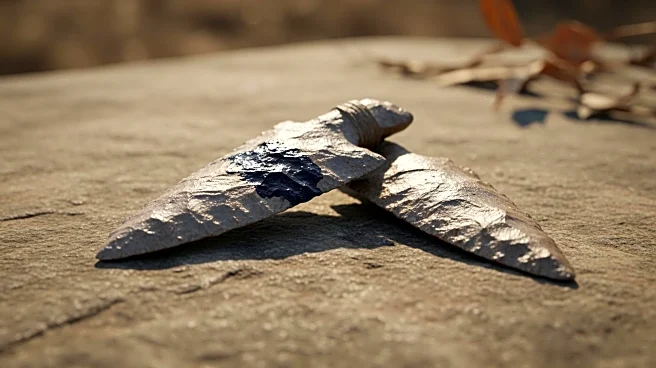
Scientists have discovered the oldest known traces of arrow poison on 60,000-year-old quartz arrowheads in South Africa. The arrowheads, found in the Umhlatuzana Rock Shelter, contain residues of alkaloids from the Boophone disticha plant, known for its
toxic properties. This discovery highlights the chemical knowledge and hunting strategies of early humans. The study, published in Science Advances, shows that early humans used the plant's toxic exudate, which could cause severe effects such as respiratory paralysis and coma, to enhance their hunting capabilities. This finding provides new insights into the technological and cognitive advancements of prehistoric societies.
Why It's Important?
The discovery of these poisoned arrowheads offers significant insights into the technological and cognitive abilities of early humans. It demonstrates their advanced understanding of natural resources and their ability to apply this knowledge to improve hunting efficiency. This finding also contributes to the broader understanding of human evolution, particularly in terms of the development of complex behaviors and survival strategies. The use of poison in hunting reflects a sophisticated level of planning and problem-solving, which are key indicators of cognitive development in early human societies.