





What's Happening?
The Ukrainian Defense Ministry has significantly increased the deployment of ground robots for logistical operations on the front lines. These robots are now delivering ammunition, water, and food, replacing human soldiers in hazardous areas. In August
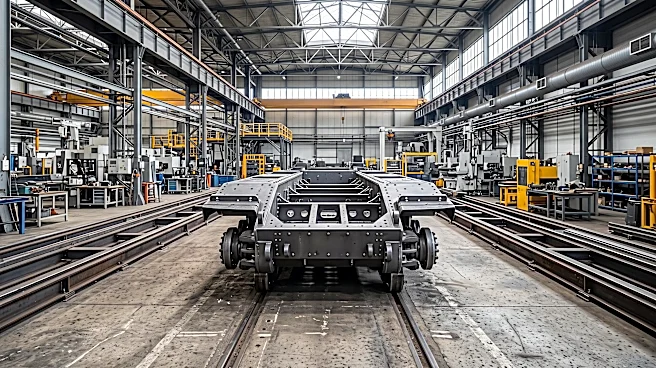
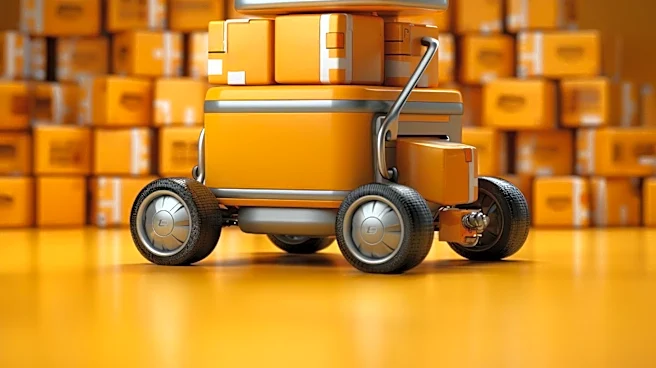
alone, these unmanned ground vehicles (UGVs) conducted over 25,000 supply and evacuation missions, a substantial increase from January's count. The ministry's objective is to automate as much frontline logistics as possible. However, this increased reliance on robots has also made them targets for Russian drone units, which actively hunt supply routes. Ukrainian company NUMO Robotics recently unveiled LOKO, a heavy wheeled ground robot capable of hauling up to 500 kg and towing damaged robots for repair, designed to reduce the number of logistics trips and enhance support for other robotic systems. This shift is transforming the roles of soldiers, moving them from physical logistics to operating, modifying, and planning missions for these robotic systems.
Why It's Important?
The increasing use of ground robots in Ukraine's military logistics marks a significant evolution in modern warfare, prioritizing the safety of soldiers while maintaining critical supply lines. By reducing the need for human personnel in dangerous 'kill zones,' Ukraine can mitigate casualties and preserve its fighting force. This technological shift also redefines military roles, requiring soldiers to develop new skills in robotics, engineering, and remote operation. The development and deployment of advanced UGVs like LOKO demonstrate Ukraine's innovative approach to battlefield challenges, fostering a domestic defense industry focused on unmanned systems. This trend could influence future military doctrines globally, emphasizing robotic integration for high-risk tasks and potentially altering the human cost of conflict. The vulnerability of these robots to Russian drone attacks, however, highlights an ongoing technological arms race in unmanned systems.
What's Next?
NUMO Robotics is currently preparing its LOKO ground robot for codification, a procedure by the Defense Ministry that will clear it for widespread military use. This suggests a continued push towards integrating more advanced and heavier-duty robots into frontline operations. The ongoing development of countermeasures against Russian drone units targeting these robots will be crucial. Furthermore, the Ukrainian defense industry is expected to continue innovating, with companies like Ratel Robotics and TAF Industries already producing thousands of UGVs. The military will likely focus on enhancing the autonomy, durability, and operational range of these systems, while also training more soldiers in robotics and remote operations to meet the evolving demands of the 'robot war.' The success and challenges faced by Ukraine in this domain will likely serve as a case study for other nations considering similar technological shifts in their defense strategies.
Beyond the Headlines
The shift towards robotic warfare in Ukraine carries profound implications beyond immediate military logistics. Ethically, it raises questions about the nature of combat and the increasing distance between human decision-makers and the direct consequences of conflict. While saving human lives is a clear benefit, the reliance on machines could desensitize warfare or create new vulnerabilities if these systems are compromised or malfunction. Legally, the deployment of increasingly autonomous systems may necessitate new international frameworks for accountability and rules of engagement. Culturally, it could reshape public perception of military service, moving it from a physically demanding role to one requiring advanced technical and cognitive skills. This transformation also highlights a broader societal trend of automation, where even the most dangerous human tasks are being delegated to machines, potentially leading to long-term shifts in labor markets and educational priorities within the defense sector and beyond.