

What's Happening?
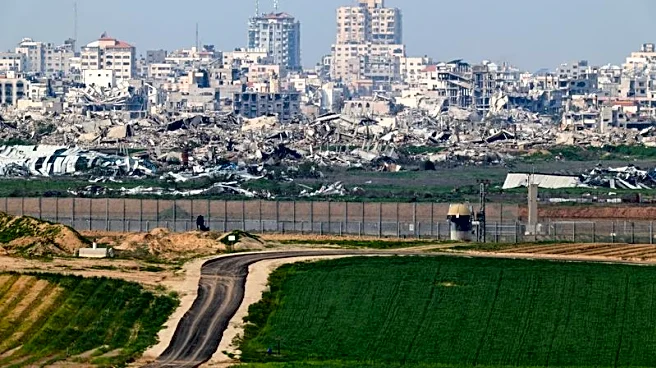
The Israeli Defense Forces (IDF) have accused Hamas operatives of using emergency vehicles, specifically ambulances, to transport weapons within the Gaza Strip. According to the IDF, this activity involves moving weapons from hospitals to schools, which
they claim is a violation of international law. The IDF has released drone footage showing armed operatives using ambulances for this purpose. Additionally, the IDF reported finding a significant cache of weapons, including 110 mortar rounds and rockets, hidden within United Nations Relief and Works Agency (UNRWA) blankets and humanitarian aid in southern Gaza. This discovery is noted as one of the largest finds of longer-range weapons since the 2025 Gaza ceasefire deal brokered by President Trump.
Why It's Important?
The allegations against Hamas highlight ongoing tensions and the complex security situation in Gaza. The use of civilian infrastructure for military purposes poses significant challenges for humanitarian operations and complicates efforts to maintain peace and security in the region. The IDF's findings could impact international perceptions of the conflict and influence diplomatic relations, particularly concerning the provision of humanitarian aid. The situation underscores the difficulties in distinguishing between military and civilian targets in conflict zones, potentially affecting future international aid and intervention strategies.
What's Next?
The IDF is likely to continue its surveillance and patrols in the region to prevent further weapon smuggling. International bodies and humanitarian organizations may need to reassess their operations in Gaza to ensure aid is not being misused. Diplomatic discussions could intensify as stakeholders seek to address the dual challenges of providing humanitarian assistance while preventing its exploitation for military purposes. The situation may also prompt calls for increased international oversight and potential sanctions against those found violating international law.
Beyond the Headlines
The use of ambulances and other civilian infrastructure for military purposes raises ethical and legal questions about the conduct of warfare and the protection of civilians. It challenges the principles of international humanitarian law, which seeks to safeguard non-combatants and ensure the neutrality of medical and humanitarian services. This development could lead to broader discussions on the need for stricter enforcement of international laws and the role of international organizations in monitoring compliance.