






What's Happening?
The Hokkaido Agricultural Research Center (HARC) of the National Agriculture and Food Research Organization (NARO) is conducting extensive research within its Department of Large-Scale Upland Farming Research. This department is dedicated to developing
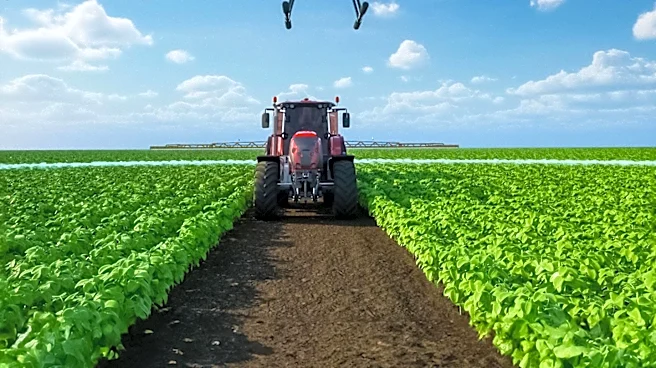
technologies aimed at labor-saving production and ensuring a stable supply of key crops in Hokkaido's large-scale upland farming regions. These crops include wheat, legumes, potatoes, and sugar beets. The department is structured into seven specialized groups: the Smart Field Crop Rotation Group, Field Farming Information and Engineering Group, Climate Change Adaptation Group, Agri-environmental Pest Management Group, Wheat Breeding Group, Potato Breeding Group, and Regional Crop Breeding Group. Each group addresses specific challenges within the agricultural sector. Their collective efforts are focused on creating efficient and rational production technologies that leverage aerial field environment information, crop imagery, and meteorological data. Additionally, the department is developing strategies to mitigate and overcome production risks such as adverse weather conditions, diseases, and pests. A significant part of their work also involves breeding new varieties of wheat, potatoes, sugar beets, and buckwheat to enhance agricultural output and resilience.
Why It's Important?
This research is crucial for the agricultural sector, particularly in regions like Hokkaido that rely on large-scale upland farming. The development of labor-saving production technologies can significantly reduce operational costs and address labor shortages, making farming more sustainable and economically viable. By focusing on stable crop supply, the research contributes to food security and market stability for essential commodities. The integration of information from aerial field environments, crop imagery, and meteorological data represents a move towards precision agriculture, which can optimize resource use and improve crop yields. Furthermore, the development of technologies to combat production risks like weather, diseases, and pests is vital for protecting farmers' livelihoods and ensuring consistent agricultural output. The breeding of new crop varieties enhances resilience against environmental challenges and improves crop quality, which has long-term benefits for both producers and consumers. This comprehensive approach to agricultural research supports the modernization and sustainability of farming practices.
What's Next?
The ongoing research by NARO's Hokkaido Agricultural Research Center is expected to yield new agricultural technologies and crop varieties that will be implemented in large-scale upland farming. Future developments will likely include the refinement of smart farming techniques, further integration of data analytics for predictive agriculture, and the introduction of more resilient and higher-yielding crop strains. Collaboration with local farmers and agricultural businesses will be essential for the successful adoption of these innovations. The department will continue to monitor environmental changes and agricultural challenges to adapt its research priorities accordingly, ensuring that its efforts remain relevant and impactful. There may also be further advancements in pest and disease management strategies, potentially leading to more environmentally friendly solutions. The long-term goal is to establish a highly efficient, sustainable, and resilient agricultural system in Hokkaido, serving as a model for other regions facing similar challenges.
Beyond the Headlines
The work at NARO's Hokkaido Agricultural Research Center reflects a broader global trend towards sustainable and technologically advanced agriculture. The emphasis on labor-saving techniques and risk mitigation addresses critical issues facing modern farming, including an aging agricultural workforce and the increasing unpredictability of climate patterns. The use of advanced data and imagery in farming signifies a shift towards data-driven decision-making, transforming traditional agricultural practices into a more scientific and precise endeavor. This research also has implications for food policy and economic stability, as a reliable food supply is fundamental to national security and economic well-being. The focus on breeding new crop varieties highlights the ongoing battle against evolving plant diseases and pests, as well as the need for crops that can thrive in changing climatic conditions. Ultimately, these efforts contribute to a more resilient food system, capable of adapting to future challenges and ensuring food security for populations.