



What's Happening?
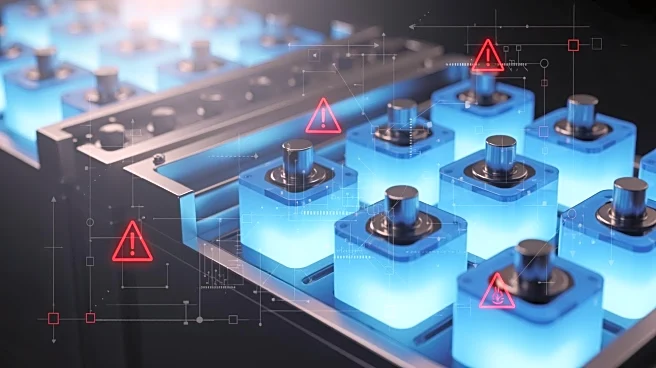
Utility-scale battery energy storage systems (BESS) are increasingly vulnerable to cyberattacks from nation-state and criminal groups, according to a white paper by Brattle Group and Dragos. The report highlights that as BESS deployments are projected
to grow significantly over the next five years, driven by demand from data centers and other sectors, they become attractive targets for cyber threats. The paper warns that the current pace of deployment is outstripping the ability to secure these systems effectively, posing risks of significant economic and operational disruptions. The report also notes that a single outage in a 100 megawatt system could result in substantial financial losses, emphasizing the need for enhanced security measures.
Why It's Important?
The increasing reliance on battery storage systems for grid stability and renewable energy integration makes them critical infrastructure. A successful cyberattack could lead to widespread power outages, affecting millions of consumers and causing economic losses. The report underscores the urgency for utilities and policymakers to prioritize cybersecurity in energy infrastructure to prevent potential disruptions. As the U.S. continues to transition towards clean energy, ensuring the security of these systems is vital for maintaining energy reliability and national security.
What's Next?
Utilities and energy companies are expected to invest more in cybersecurity measures to protect BESS from potential threats. This may include adopting advanced technologies and collaborating with cybersecurity firms to enhance system resilience. Policymakers might also consider implementing stricter regulations and standards to ensure the security of critical energy infrastructure. The ongoing monitoring of threat groups by cybersecurity firms like Dragos will be crucial in identifying and mitigating potential risks to the grid.