





What's Happening?
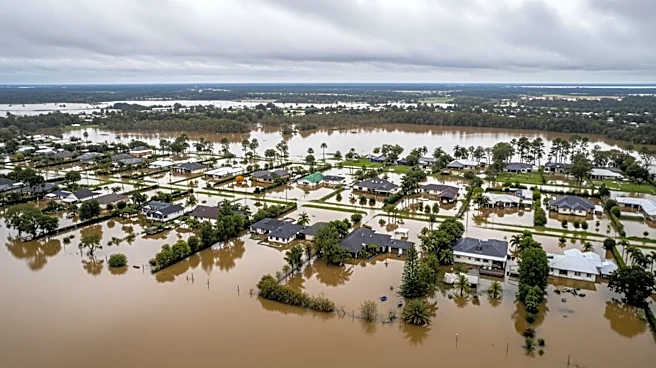
Recent heavy rains in Kenya have resulted in severe flooding, leading to the deaths of 18 people over the past week, primarily due to drowning. The flooding has affected more than 54,000 households across the country, with significant impacts in the capital,
Nairobi, where 6,000 households have been affected. The Interior Ministry reports that dozens of schools and hospitals have been inundated, and 17 roads have been rendered impassable. Additionally, mudslides have forced thousands to evacuate from the western Rift Valley area. Residents living downstream of the Tana and Athi rivers have been advised to relocate to higher ground as water levels in hydroelectric dams rise. The Kenya Meteorological Department has forecasted continued heavy rainfall for the first two weeks of May, exacerbating the situation.
Why It's Important?
The flooding in Kenya highlights the vulnerability of infrastructure and communities to extreme weather events, which are becoming increasingly frequent and severe. The impact on essential services such as schools and hospitals underscores the broader societal challenges posed by climate-related disasters. The situation also raises concerns about the preparedness and resilience of affected regions, as well as the potential for further displacement and humanitarian needs. The ongoing rains and rising water levels in dams pose a continued threat to safety and livelihoods, emphasizing the need for effective disaster management and mitigation strategies.
What's Next?
As the heavy rains are expected to persist, the Kenyan government and disaster response agencies will likely focus on emergency relief efforts, including evacuations and the provision of aid to affected communities. Long-term, there may be increased pressure on the government to invest in infrastructure improvements and climate adaptation measures to mitigate future risks. International aid and support may also be sought to address the immediate humanitarian needs and to bolster resilience against future flooding events.
Beyond the Headlines
The flooding in Kenya serves as a stark reminder of the broader implications of climate change, particularly for developing nations with limited resources to cope with natural disasters. The situation underscores the ethical responsibility of the global community to support vulnerable countries in building resilience and adapting to changing climate conditions. It also highlights the need for integrated approaches that consider environmental, social, and economic factors in disaster risk reduction and management.