
What's Happening?
A recent study from Rutgers University has revealed the critical role of iron in the photosynthesis process of marine phytoplankton, which are responsible for producing a significant portion of the Earth's
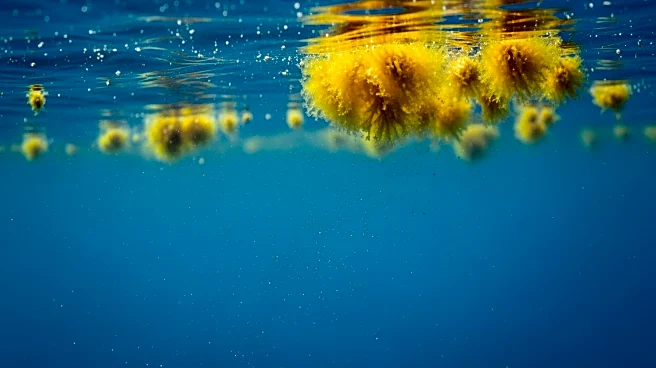
oxygen. The research, published in the Proceedings of the National Academy of Sciences, indicates that iron is a limiting factor in the ability of these microscopic algae to perform photosynthesis. This process is essential for converting light energy into chemical energy and releasing oxygen. The study highlights that without sufficient iron, photosynthesis slows or halts, impacting the growth of phytoplankton and their ability to capture sunlight and remove carbon dioxide from the atmosphere. The research was conducted by Heshani Pupulewatte, who spent 37 days at sea collecting data on the South Atlantic and Southern Oceans. The findings underscore the potential impact of climate change on ocean circulation patterns, which may reduce iron delivery to the sea, affecting marine ecosystems.
Why It's Important?
The study's findings are significant as they highlight the interconnectedness of oceanic processes and global climate systems. Phytoplankton are a foundational component of marine food webs, supporting species such as krill, which in turn feed larger animals like whales and seals. A reduction in iron levels could lead to a decrease in phytoplankton populations, thereby affecting the entire marine ecosystem. Additionally, since phytoplankton play a crucial role in carbon dioxide absorption, any disruption in their growth could exacerbate climate change by allowing more CO2 to remain in the atmosphere. This research provides valuable insights into how changes in nutrient availability can have far-reaching effects on both marine life and global climate patterns.
What's Next?
Future research may focus on further understanding the molecular mechanisms of photosynthesis in natural environments and how they are influenced by nutrient availability. Scientists may also explore strategies to mitigate the impacts of reduced iron levels in the ocean, potentially through geoengineering or conservation efforts aimed at preserving natural iron sources. Additionally, policymakers and environmental organizations might use this information to advocate for measures that address climate change and its effects on oceanic nutrient cycles.
Beyond the Headlines
The study raises ethical and environmental questions about human intervention in natural processes. While geoengineering could offer solutions to nutrient shortages, it also poses risks of unintended ecological consequences. The research also highlights the importance of international cooperation in addressing climate change, as oceanic processes do not adhere to national boundaries. Long-term, this study could influence global environmental policies and conservation strategies aimed at preserving marine biodiversity and ensuring the health of ocean ecosystems.