
What's Happening?
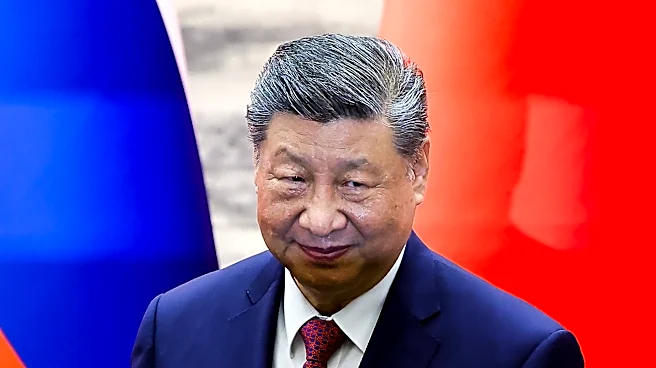
Chinese President Xi Jinping is scheduled to visit North Korea on June 8 and 9, marking his first trip to the country since 2019. This visit, at the invitation of North Korean leader Kim Jong-un, is intended
to reinforce the strong ties between China and North Korea. The trip comes as both nations seek to rebuild their relationship after years of relative isolation due to the COVID-19 pandemic and differing stances on denuclearization. The visit coincides with the 65th anniversary of the China-North Korea Treaty of Friendship, Cooperation, and Mutual Assistance. During the visit, Xi and Kim are expected to discuss bilateral relations and issues of mutual interest, aiming to promote greater development in their relationship.
Why It's Important?
Xi Jinping's visit to North Korea is significant as it underscores China's strategic interest in maintaining strong ties with its only formal treaty ally, North Korea. This visit is a part of China's broader diplomatic efforts to reassert its influence in Northeast Asia, especially in light of North Korea's growing military cooperation with Russia. Strengthening ties with North Korea could also provide China with leverage in regional security discussions, particularly concerning denuclearization. For North Korea, the visit represents an opportunity to solidify its relationship with a major global power, potentially gaining economic and political support amid international sanctions.
What's Next?
Following Xi Jinping's visit, it is anticipated that China and North Korea will continue to enhance their bilateral cooperation. This could involve increased economic exchanges and diplomatic engagements. The visit may also prompt reactions from other regional stakeholders, such as South Korea and the United States, who are closely monitoring the dynamics of China-North Korea relations. Additionally, the outcomes of the discussions between Xi and Kim could influence future negotiations on denuclearization and regional security.
Beyond the Headlines
The visit highlights the complex geopolitical landscape in Northeast Asia, where historical alliances and modern strategic interests intersect. China's engagement with North Korea may also reflect its broader strategy to counterbalance U.S. influence in the region. Furthermore, the visit could have implications for China's domestic politics, as it showcases Xi Jinping's active role in foreign policy and his commitment to strengthening China's global partnerships.