








What's Happening?
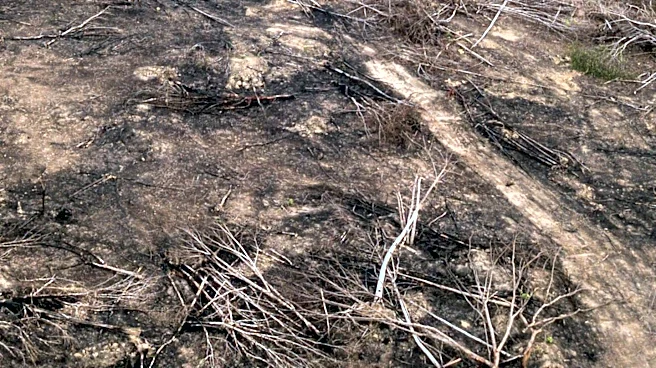
The Amazon rainforest, the world's largest rainforest covering over 1.4 billion acres across nine countries, is experiencing substantial damage. A major scientific synthesis published in 2024 estimates that approximately 15% of the original forest has
been cleared. Furthermore, an additional 17% of the remaining forest has been degraded due to logging, edge effects, understory fires, and other human disturbances. This degradation impacts the forest's ability to function as a carbon sink, with parts of southeastern Amazonia now releasing more carbon than they absorb. The Amazon is a critical global climate regulator, storing an estimated 150 to 200 billion metric tons of carbon and influencing rainfall across South America through its moisture recycling. Despite its vast size and unparalleled biodiversity, housing one in ten known species on Earth, the rainforest continues to face increasing pressures from human activities.
Why It's Important?
The ongoing deforestation and degradation of the Amazon rainforest have profound global implications, particularly for climate regulation and biodiversity. The Amazon's role in storing massive amounts of carbon means its destruction contributes significantly to greenhouse gas emissions, exacerbating climate change. The shift in parts of southeastern Amazonia from a carbon sink to a carbon source highlights a critical tipping point, potentially accelerating global warming. The loss of forest cover also disrupts regional weather patterns, affecting rainfall and agricultural productivity across South America. From a biodiversity perspective, the Amazon is an irreplaceable reservoir of life, with countless species, many yet undiscovered, facing extinction. The destruction of their habitats not only diminishes global biodiversity but also removes potential sources for new medicines, scientific discoveries, and ecological services vital for human well-being. The economic impact extends to indigenous communities and local populations who depend directly on the forest for their livelihoods and cultural heritage, facing displacement and loss of traditional ways of life.
What's Next?
Addressing the threats to the Amazon will require a multi-faceted approach involving international cooperation, policy changes, and local community engagement. Continued monitoring of deforestation rates and carbon balance will be crucial to track the effectiveness of conservation efforts. Governments and international organizations are expected to intensify efforts to enforce environmental regulations, combat illegal logging and mining, and promote sustainable land use practices. Initiatives that empower indigenous communities to protect their territories, recognizing their traditional knowledge and stewardship, are likely to expand. Furthermore, there will be a push for increased funding for conservation projects, including reforestation and the establishment of protected areas and wildlife corridors. The scientific community will continue to research the Amazon's ecological processes and the impacts of climate change to inform more effective conservation strategies. The success of these efforts will determine whether the Amazon can recover its vital ecological functions and continue to support its extraordinary biodiversity.
Beyond the Headlines
The plight of the Amazon rainforest extends beyond environmental concerns, touching upon complex ethical, social, and economic dimensions. The valuation of the forest primarily as a carbon stock or resource overlooks its intrinsic value as a living ecosystem and the cultural significance it holds for indigenous peoples. The ongoing destruction raises questions about global responsibility and the equitable distribution of environmental burdens and benefits. There's a growing recognition that effective conservation must integrate the rights and knowledge of traditional communities, moving away from top-down approaches. The economic models that drive deforestation, often linked to agricultural expansion and resource extraction, highlight the need for systemic changes towards sustainable economies that prioritize ecological health and social equity. The long-term shifts triggered by Amazonian degradation could include irreversible climate feedback loops, widespread species loss, and increased social instability in affected regions, underscoring the urgency of a holistic and just transition.