







What's Happening?
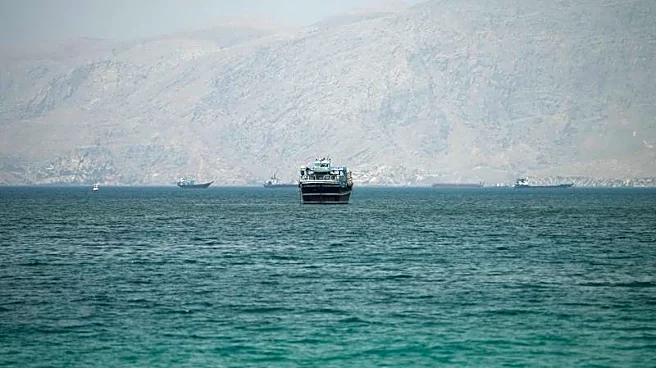
The Strait of Hormuz is witnessing a rise in tanker traffic as more ships are openly signaling their intention to traverse the waterway. This development indicates growing confidence among shipowners and traders about the safety of sending vessels through
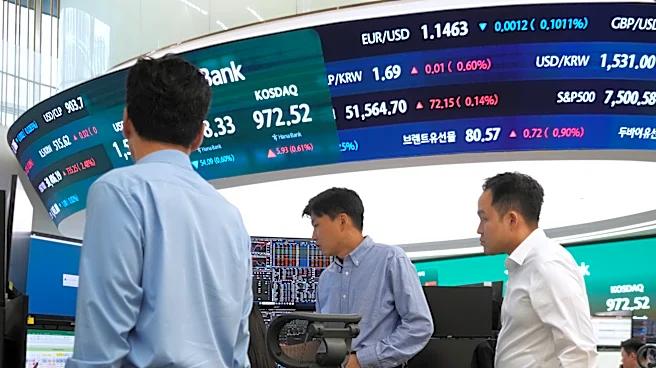
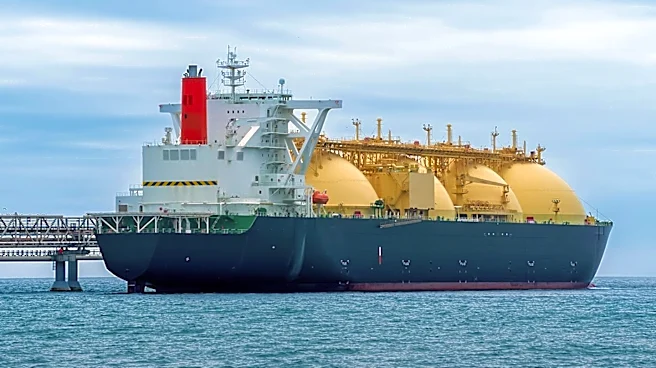
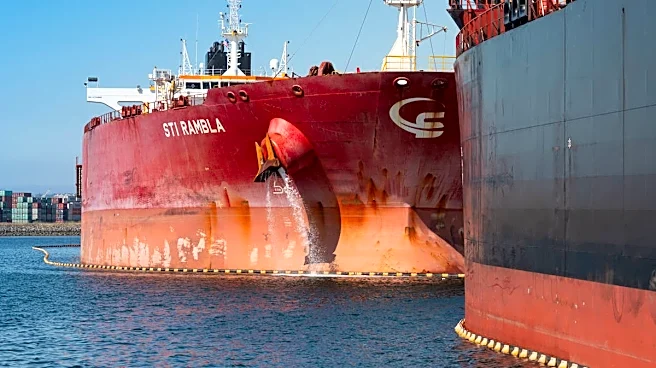
this critical chokepoint. On a recent Tuesday morning, seven tankers were observed in the strait using conventional tracking signals, including two fully-laden non-Iranian supertankers leaving the Persian Gulf. This shift comes as an interim deal between the U.S. and Iran has been reached, allowing for a resumption in traffic. The agreement has led to millions of barrels of crude and natural gas tankers passing through the strait, which connects the Gulf to global markets. The increased activity has also contributed to a decrease in crude futures, with Brent crude falling below $77 a barrel.
Why It's Important?
The increase in tanker traffic through the Strait of Hormuz is significant as it suggests a reduction in geopolitical tensions that have previously threatened global oil supply routes. The strait is a vital passage for the global energy market, with about 135 vessels typically traversing it daily in peacetime. The resumption of traffic and the use of automated identification systems by tankers provide greater transparency and assurance to oil and shipping markets, as well as global investors. This development could stabilize oil prices and reduce the risk premium associated with Middle Eastern oil, benefiting both producers and consumers worldwide.
What's Next?
As the interim deal between the U.S. and Iran progresses, further negotiations in Switzerland aim to reach a permanent settlement. If successful, this could lead to sustained stability in the region, encouraging more shipping companies to resume normal operations through the Strait of Hormuz. However, some vessels continue to turn off their transponders during crossings, indicating lingering caution. The outcome of ongoing diplomatic talks will be crucial in determining the long-term security and economic implications for the global energy market.