








What's Happening?
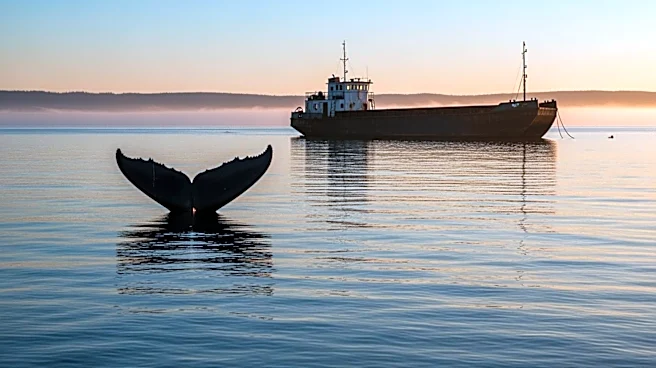
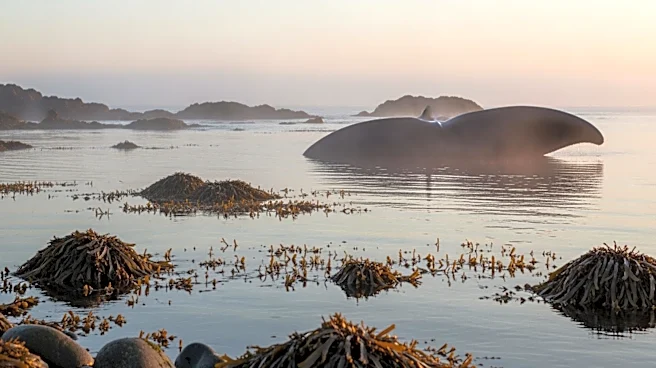
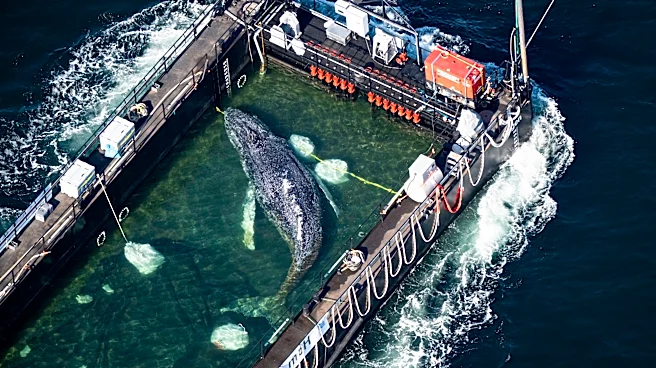
A barge carrying a humpback whale, nicknamed Timmy, has embarked on a journey to the North Sea after being stranded in shallow waters near Germany since March. The whale was initially spotted near Germany's Baltic Sea coast, far from its natural Atlantic
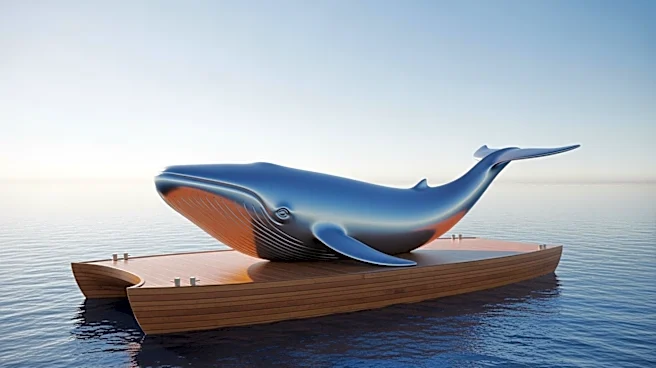
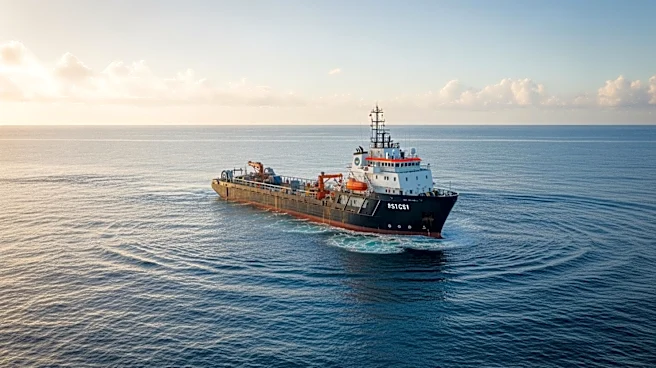
Ocean habitat. Efforts to guide the whale back to deeper waters were unsuccessful, leading to its transport on a barge. The operation, described as unprecedented in Germany, involved pulling the whale onto a flooded barge using straps and a specially dredged channel. The barge is now navigating around Denmark's northern tip towards the North Sea. The initiative, led by a private group, was approved by Till Backhaus, the minister for climate protection, agriculture, rural areas, and the environment of Mecklenburg Vorpommern, despite concerns from some scientists about the whale's health.
Why It's Important?
The transport of Timmy the whale highlights the complexities and ethical considerations in wildlife rescue operations. The decision to intervene in the whale's natural course of life has sparked debate among scientists, activists, and the public. While some argue that the whale should have been left to die naturally, others believe that human intervention was necessary to save its life. This event underscores the challenges faced by conservationists in balancing animal welfare with natural processes. The successful transport of Timmy could set a precedent for future wildlife rescue operations, influencing policies and practices in marine conservation.
What's Next?
The barge carrying Timmy is expected to reach the North Sea soon. The outcome of this operation will likely be closely monitored by conservationists and scientists. If successful, it may encourage similar rescue efforts for other marine animals in distress. However, the debate over human intervention in wildlife matters is expected to continue, with potential implications for future conservation strategies and policies. The scientific community may also conduct further studies to assess the impact of such interventions on animal health and stress levels.