
What's Happening?
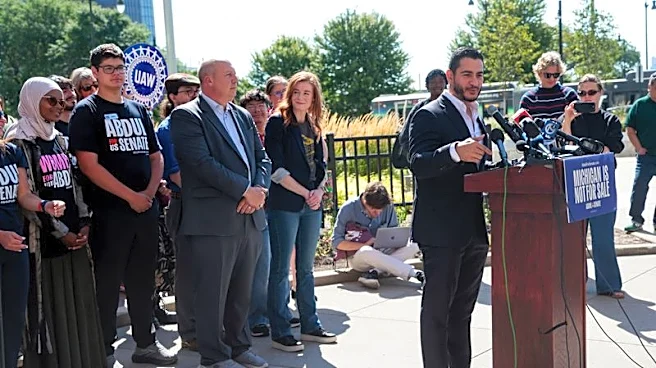
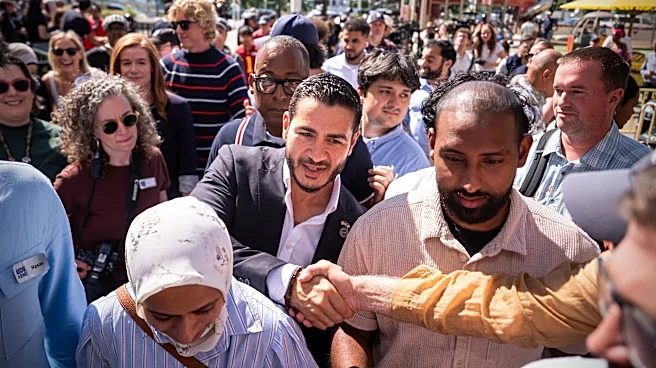
In a significant development for the Democratic Party, Abdul el-Sayed, a progressive candidate, has won the U.S. Senate nomination in Michigan. This victory highlights the ongoing tension between the party's
progressive and establishment wings. The primary race was closely watched as a potential indicator of the party's direction ahead of the 2026 midterms. El-Sayed's win over a more moderate opponent suggests a shift towards progressive policies within the party. Political analysts, including CNN's David Axelrod, have noted that this could make the upcoming general election a challenging contest for Democrats, especially with the seat previously held by Gary Peters, who is not seeking re-election.
Why It's Important?
El-Sayed's victory underscores the growing influence of progressive voices within the Democratic Party, which could reshape the party's strategy and policy priorities. This shift may energize younger and more liberal voters but could also alienate moderate Democrats and independents. The outcome of this primary could influence other races across the country, as candidates and party leaders assess the viability of progressive platforms. The Michigan Senate race is particularly critical as it is seen as a battleground state, with its political landscape having fluctuated between Democratic and Republican control in recent elections.
What's Next?
As the general election approaches, the Democratic Party will need to unify its factions to present a cohesive front against Republican candidate Mike Rogers, who is currently leading in some polls. Both el-Sayed and his primary opponent have called for party unity, but bridging the divide between progressives and moderates will require significant effort. The outcome of this race could set a precedent for how the Democratic Party navigates internal divisions and positions itself for future elections. Additionally, the party's approach in Michigan may serve as a model for other states with similar political dynamics.