






What's Happening?
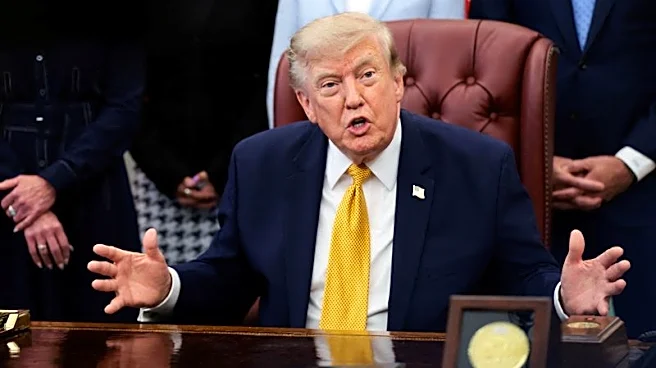
President Trump's administration is facing legal challenges over its trade policies, particularly the tariffs imposed to address trade imbalances. The Supreme Court and lower courts have blocked some of these tariffs, labeling them as taxes on the American
people. Despite these setbacks, the administration claims significant foreign investment commitments, attributed to Trump's aggressive trade tactics. These include leveraging high tariffs as bargaining chips to secure investment promises from countries and companies. However, the actual realization of these investments remains uncertain, with some experts questioning the effectiveness of Trump's approach.
Why It's Important?
The legal challenges to Trump's tariffs highlight the complexities and potential overreach of using tariffs as a tool for economic policy. While the administration touts increased foreign investment as a success, the lack of concrete mechanisms to ensure these commitments materialize raises questions about the long-term impact on the U.S. economy. The situation underscores the delicate balance between protecting domestic industries and fostering international trade relations. The outcome of these legal battles could set precedents for future administrations in handling trade disputes and economic diplomacy.
What's Next?
As legal proceedings continue, the administration may need to reassess its trade strategies to align with judicial rulings and international trade norms. The uncertainty surrounding the fulfillment of investment commitments could prompt a reevaluation of the administration's economic policies. Future U.S. administrations may face challenges in rebuilding trust with international partners, who may seek to diversify their trade relationships to mitigate risks associated with U.S. policy volatility. The evolving trade landscape could influence global economic dynamics, with potential shifts in alliances and trade agreements.