







What's Happening?
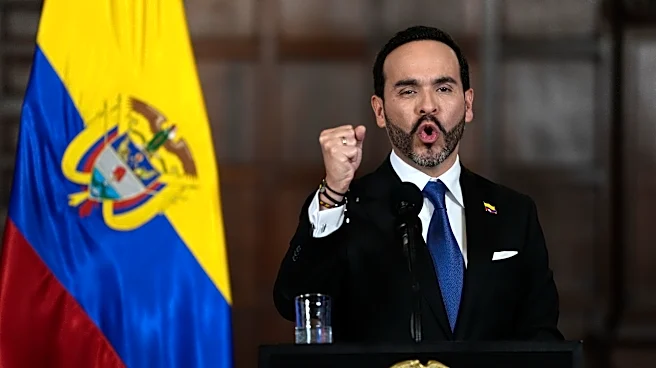
The global fossil-fuel non-proliferation treaty coalition, which initially comprised 57 nations, has experienced a significant setback following Colombia's decision to exit the group. This coalition is dedicated to accelerating the transition away from
fossil fuels through the Fossil Fuel Non-Proliferation Treaty Initiative. Despite Colombia's departure, the initiative remains committed to its core objective. The organization is now focusing on monitoring global progress in this area through a newly developed 'Coalition of the Willing Tracker,' created by We Don't Have Time. This tool aims to provide transparency and track the commitments and actions of participating nations, highlighting the initiative's resilience in the face of political shifts and challenges to its membership.
Why It's Important?
The withdrawal of a nation like Colombia from the fossil-fuel non-proliferation treaty coalition carries significant implications for global climate efforts and the broader energy transition. Such exits can undermine the collective strength and perceived unity of international climate initiatives, potentially slowing down the momentum for transitioning away from fossil fuels. For the U.S., this development could influence its own diplomatic strategies regarding climate change, as the effectiveness of international treaties often relies on broad participation. A fragmented coalition might also impact the global market for renewable energy technologies and investments, as a less unified front could lead to slower adoption rates of green alternatives. Furthermore, it highlights the political complexities and national interests that often challenge international environmental agreements, potentially setting a precedent for other nations to reconsider their commitments, thereby affecting the overall pace of global decarbonization.
What's Next?
Following Colombia's exit, the Fossil Fuel Non-Proliferation Treaty Initiative will likely intensify its efforts to demonstrate the continued relevance and impact of its mission, potentially seeking new member states or strengthening commitments from existing ones. The 'Coalition of the Willing Tracker' will become a crucial tool for the initiative to maintain transparency and accountability among its remaining members, showcasing progress and identifying areas needing more attention. This development may also prompt other nations to re-evaluate their positions within similar climate coalitions, leading to potential shifts in international alliances and climate policy. For the U.S., this could mean a renewed focus on bilateral climate agreements or increased diplomatic pressure to encourage broader participation in multilateral environmental efforts, as the effectiveness of global climate action hinges on widespread international cooperation.
Beyond the Headlines
Colombia's withdrawal from the fossil-fuel non-proliferation treaty coalition underscores the intricate balance between national economic interests and global environmental imperatives. Many developing nations, including those with significant fossil fuel reserves, face the dilemma of transitioning to cleaner energy sources while simultaneously addressing economic development and energy security needs. This situation highlights the ethical challenge of equitable burden-sharing in climate action, where historical emitters and wealthier nations are often expected to provide greater support for the transition in less developed countries. The incident also brings to light the cultural and political dimensions of energy policy, where fossil fuel industries often represent substantial employment and economic stability, making rapid transitions politically contentious. The long-term shift triggered by such withdrawals could be a re-evaluation of how international climate agreements are structured, moving towards more flexible or incentivized frameworks that better accommodate diverse national circumstances, rather than a one-size-fits-all approach.