






What's Happening?
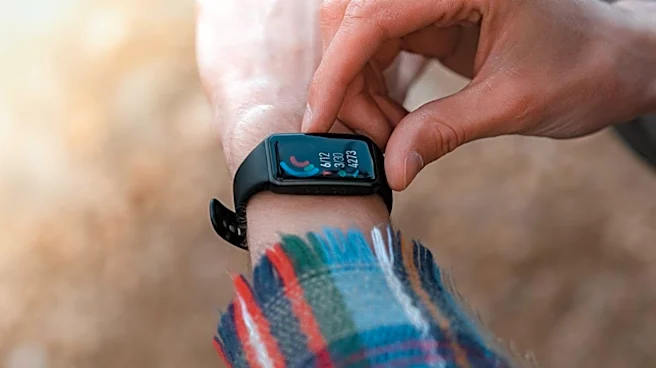
Milos Rasic has developed an open-source version of a Bluetooth heart rate monitor, a device commonly used in gyms to relay heart rate data. This project utilizes an AD8232 for capturing heart rate signals and a Seeed Studio XAIO ESP32 board for Bluetooth connectivity.
The device is powered by a single 3.7 V cell, which is boosted to 5 V. To maintain simplicity, the design intentionally omits a charge controller, leaving the charging solution to the user. The software for the monitor is loaded via the Arduino IDE, suggesting potential compatibility with other ESP32 CPUs through minor modifications. This open-source initiative provides an alternative to commercially available heart rate monitors, which, while often inexpensive, do not offer the same level of transparency and user modifiability. Rasic has previously discussed his efforts in developing open medical devices, including a talk on blood pressure monitoring at Hackaday Europe.
Why It's Important?
The development of an open-source Bluetooth heart rate monitor is significant for several reasons. Firstly, it promotes transparency and user control in personal health monitoring technology. Unlike proprietary devices, an open-source model allows users and developers to understand, modify, and improve the device's functionality, fostering innovation and customization. This can lead to more tailored solutions for individuals with specific needs or those interested in integrating health data into broader open-source ecosystems. Secondly, it democratizes access to health technology by providing a blueprint for affordable, self-built devices, potentially reducing reliance on commercial products that may have hidden costs or data privacy concerns. This initiative aligns with a growing movement towards open hardware and software in various fields, including medical devices, which can enhance trust and community-driven development. The project also serves as an educational tool, demonstrating how complex electronic systems can be built with readily available components and open-source tools.
What's Next?
The open-source nature of Milos Rasic's heart rate monitor suggests several potential future developments. Users and developers within the open-source community are likely to contribute to refining the design, potentially adding features such as integrated charge controllers, improved power management, or enhanced data logging capabilities. Further modifications could include expanding compatibility with a wider range of ESP32 CPUs or other microcontrollers, making the project more accessible to a broader audience. There is also potential for the development of companion applications or integration with existing open-source health platforms to provide more comprehensive data analysis and visualization. As the project gains traction, it could inspire similar open-source initiatives for other medical and fitness monitoring devices, fostering a collaborative environment for health technology innovation. The community's engagement will be crucial in driving the evolution and adoption of this open-source heart rate monitor.
Beyond the Headlines
This open-source heart rate monitor project touches upon deeper implications concerning data ownership, privacy, and the future of personal health technology. In an era where commercial wearable devices collect vast amounts of personal health data, an open-source alternative offers users greater control over their information, mitigating concerns about data exploitation by corporations. It challenges the traditional model of proprietary health tech, advocating for a more transparent and user-centric approach. Ethically, it empowers individuals to understand the technology they use for health monitoring, fostering digital literacy and critical engagement with health data. Culturally, it contributes to the 'maker' movement, encouraging individuals to build and customize their tools rather than solely consuming off-the-shelf products. This shift could lead to a more informed and empowered public regarding their health data and the devices they use to track it, potentially influencing regulatory discussions around medical device certification and data privacy in the long term.