




What's Happening?
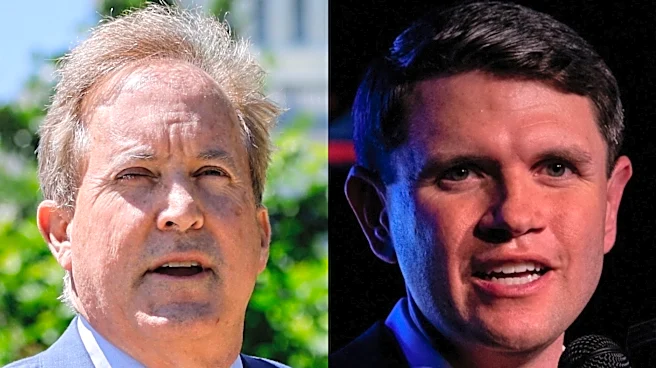
During the recent GOP primary, Senator John Cornyn's campaign attacked Ken Paxton, the Republican Attorney General, by resurfacing a decade-old incident involving a roughly $1,000 Montblanc pen. A security video from a courthouse showed Paxton, then a state
lawmaker, pocketing another lawyer's pen. The pen's owner, attorney Joe Joplin, has since endorsed Democrat James Talarico, who is now using the incident in a new ad blitz for the Texas Senate race. Paxton's campaign dismisses the renewed focus as a "childish attack" and a "mix-up at security," stating that Paxton returned the pen after being contacted by a sheriff's deputy. This incident has been a recurring theme in Paxton's political career, having also surfaced in his 2018 AG reelection race.
Why It's Important?
The resurfacing of the "stolen pen" incident is important because it highlights the persistent role of character and past conduct in political campaigns, even for seemingly minor events. For Senator Cornyn's camp, using this incident in the GOP primary was an attempt to undermine Paxton's credibility and appeal to voters concerned about ethical leadership. Now, in the general election, Democrat James Talarico is leveraging the same story to question Paxton's integrity, suggesting a pattern of questionable behavior. This tactic aims to sway voters who may be undecided or those who prioritize character in their elected officials. The incident's longevity in political discourse demonstrates how a single event can be repeatedly weaponized to influence public perception and election outcomes, potentially impacting Paxton's standing in the current Senate race where he is reportedly lagging in some polls and fundraising.
What's Next?
The Democratic campaign of James Talarico and his allies are actively using the decade-old pen incident in a new ad blitz, featuring an endorsement from the pen's owner. This suggests that the issue of Ken Paxton's character, as framed by this incident, will continue to be a central theme in the Texas Senate race. Paxton's campaign will likely continue to downplay the incident as a minor misunderstanding. The effectiveness of this strategy will depend on how voters weigh such past conduct against other political issues and candidates' platforms. The ongoing focus on this incident could influence voter turnout and perceptions, especially among those who are not firmly aligned with either party. The outcome of the election will ultimately reveal the extent to which this historical event impacts contemporary political decisions.
Beyond the Headlines
The "stolen pen" saga, despite its seemingly trivial nature, delves into deeper implications regarding public trust, political ethics, and the enduring power of narrative in shaping political careers. It illustrates how even minor transgressions, when captured on video and repeatedly brought to light, can become potent symbols of a politician's perceived character flaws. This incident raises questions about the standards of conduct expected from public officials and how the electorate processes information about a candidate's past. It also highlights the strategic use of opposition research and the media's role in amplifying such stories, turning a personal misstep into a public spectacle with long-term political consequences. The incident's persistence in various election cycles underscores the idea that in politics, perception can often be as impactful as policy, and a narrative, once established, can be difficult to shake.