





What's Happening?
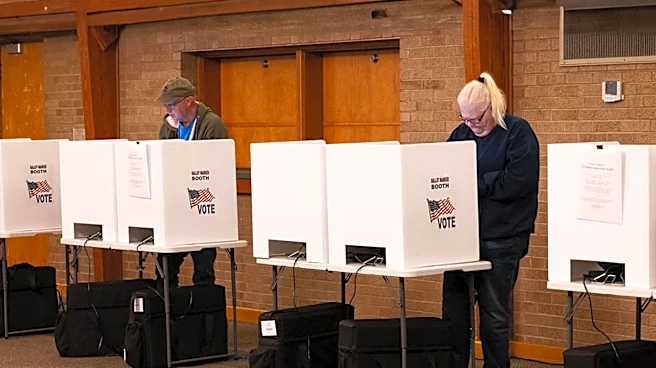
Representative Becca Balint (D-V.T.) has successfully secured the Democratic nomination for Vermont's at-large congressional seat, running unopposed in the primary election. This marks her bid for a third term in the lower chamber. Following the primary,
Balint is now focused on the general election, where she will face Republican Gerald Malloy, who won his party's nomination with 76% of the vote. Balint's campaign priorities include lowering costs, protecting Social Security and Medicare, defending freedoms, and ensuring Vermont's voice is heard in Washington. The primary results also saw other LGBTQ+ candidates achieve victories in Vermont, with several incumbents winning their primary races and new candidates advancing to the general election.
Why It's Important?
The unopposed primary victory for Representative Balint highlights a strong level of support and consolidation within the Democratic Party in Vermont for her continued representation. Her focus on issues such as lowering costs, safeguarding Social Security and Medicare, and defending freedoms resonates with a broad base of constituents and reflects key national Democratic priorities. The upcoming general election against Gerald Malloy will be a significant contest, determining the future representation of Vermont in the U.S. House. Furthermore, the success of other LGBTQ+ candidates in Vermont's primaries, including state Senators Tanya Vyhovsky and Becca White, and state Representatives Brian Cina, Will Greer, Emilie Kornheiser, and Saudia LaMont, underscores a growing trend of diverse representation in state politics. This could lead to a more inclusive legislative agenda and a broader range of perspectives in policy-making.
What's Next?
Representative Balint will now proceed to the general election, where she will campaign against Republican Gerald Malloy. Her immediate focus will be on articulating her platform to voters, emphasizing her commitment to lowering costs, protecting social programs, and defending civil liberties. The general election campaign will likely involve debates and public appearances where both candidates will present their visions for Vermont and the nation. The outcomes of these races will determine the composition of Vermont's congressional delegation and state legislature, potentially influencing policy decisions on both federal and state levels. The continued success of LGBTQ+ candidates in the general election could further solidify their presence in government and impact future legislative priorities.
Beyond the Headlines
The unopposed primary win for Representative Balint, coupled with the strong performance of other LGBTQ+ candidates in Vermont, signifies a broader shift towards increased diversity and representation in U.S. politics. This trend could lead to a more nuanced and inclusive approach to policy-making, addressing a wider range of societal needs and concerns. The emphasis on issues like Social Security, Medicare, and individual freedoms reflects a national conversation about social safety nets and civil rights, indicating that these topics will remain central to political discourse. The upcoming general election will not only decide individual races but also serve as a barometer for the political climate in Vermont, potentially influencing future electoral strategies and candidate recruitment efforts across the state.